


 Spanish
 Russian
 Arabic


Products Description
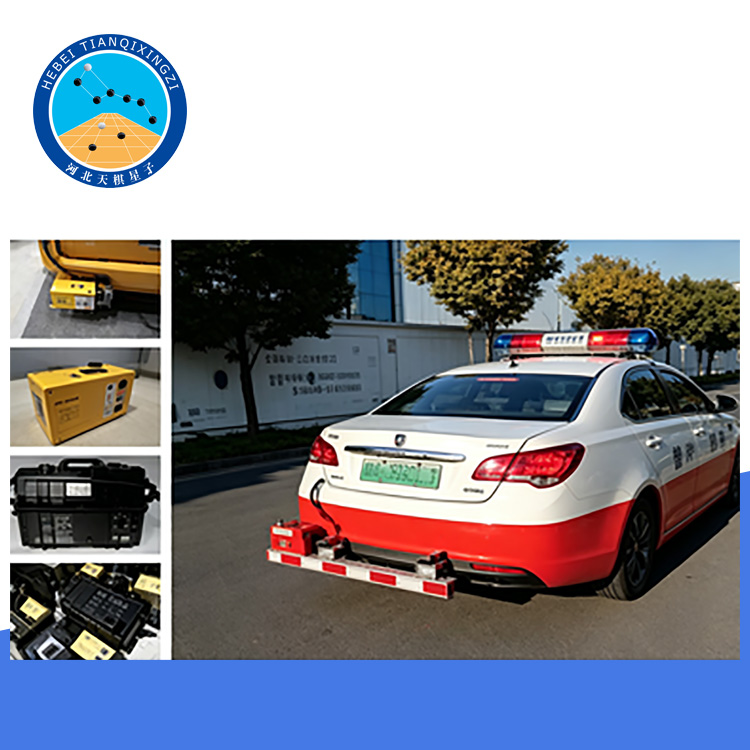
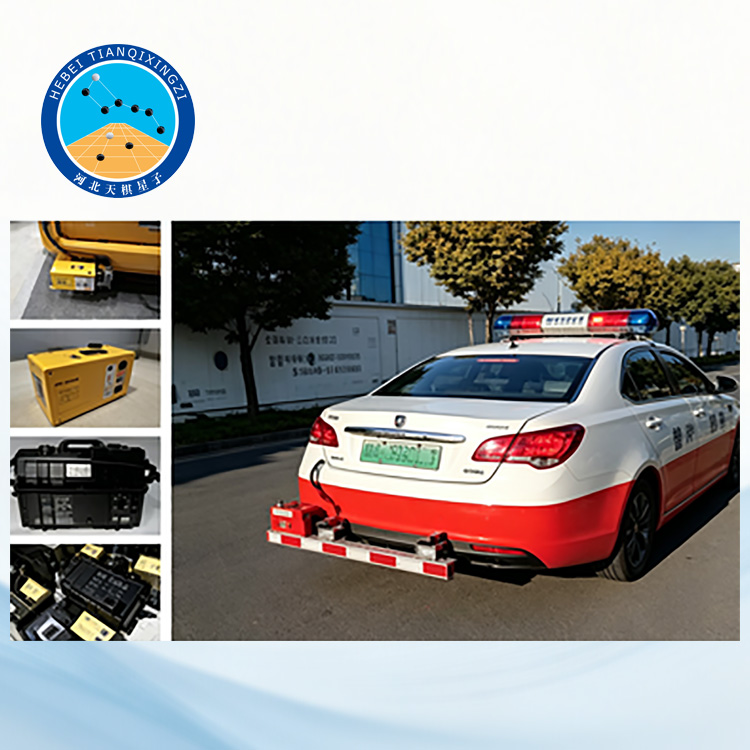
The Vehicle-Mounted Laser Road Roughness Tester adopts an inertial profiling measurement method. During vehicle operation, the laser sensor continuously measures the relative distance between the sensor and the pavement surface, while the accelerometer detects vehicle vertical movement.
Vehicle-Mounted Laser Road Roughness Tester for IRI
Model:TD934-1
I. Product Introduction
The Vehicle-Mounted Laser Road Roughness Tester is designed to measure the International Roughness Index (IRI) for evaluating pavement surface smoothness. It is suitable for testing roads under normal traffic conditions where the pavement is free from severe potholes, rutting, standing water, ice, snow, and mud. The instrument complies with the requirements of JTG 3450-2019 Field Test Methods of Highway Subgrade and Pavement (T0934-2008) and is designed with reference to ASTM E950/E950M, ASTM E1926, and AASHTO PP 37.
II. Structural Features
1. The Vehicle-Mounted Laser Road Roughness Tester consists of a test vehicle, a distance sensor, longitudinal profile elevation sensors, and a main control system.
2. The instrument collects relative pavement elevation data. The International Roughness Index (IRI) shall be calculated over a 100 m evaluation interval using the standard IRI computation algorithm. The test results are expressed in m/km and reported to two decimal places.
III. Main Technical Parameters
(I) Basic Technical Parameters:
(1) Test Speed: (30~100) km/h.
(2) Sampling Interval: ≤500mm.
(3) Sensor Test Accuracy: 1.0mm.
(4) Distance Calibration Error: ≤0.05%.
(II) Detailed Technical Specifications
① Pavement Roughness Measurement Parameters
1. International Roughness Index (IRI)
2. Standard Deviation of Pavement Roughness (σ)
3. Ride Quality Index (RQI)
4. Ride Number (RN)
5. Sensor-Measured Texture Depth (SMTD)
② Instrument Output Results
1. Various measurement parameters for the entire test section and any selected sub-sections.
2. Curves of various measurement parameters and raw data.
3. Vehicle speed and distance are measured automatically by the integrated automatic detection system.
③ Technical Specifications of the Vehicle-Mounted Laser Road Roughness Tester
1. Sensor Configuration: 1 or 2 sets (each set consists of one laser sensor and one accelerometer; the configuration can be selected according to user requirements).
2. Testing Speed: 20 km/h–100 km/h.
3. Continuous Measurement Distance: >50 km.
4. Measurable Longitudinal Profile Wavelength Range: <1000 m.
5. Sampling Interval: 1 mm (adjustable as required).
6. Measurement Report Interval: Any selected length greater than 5 m.
7. Minimum Longitudinal Profile Data Reporting Interval: 1 mm.
8. Operating Temperature Range: -20°C to 50°C.
9. System Power Supply: 12 V vehicle power supply.
10. On-Site Output: Data can be analyzed on-site and test results can be printed directly.
11. Clearance Between the Bottom of the Laser Sensor and the Pavement Surface: 350 mm.
④ Pavement Roughness Measurement Performance Specifications
1. Correlation with Reference Results (Reference Leveling Instrument): Correlation coefficient R² > 0.98.
2. Measurement Range: IRI: 0–15 m/km.
3. Measurement Repeatability: Coefficient of variation (Cv) < 3%.
⑤ Technical Specifications of the Laser Sensor
1. Accuracy (Deviation): <0.05 mm.
2. Resolution: <0.004 mm.
3. Linearity: ±0.075%.
4. Measurement Range: 100–600 mm.
⑥ Technical Specifications of the Accelerometer
1. Accuracy (Deviation): < ±1%.
2. Resolution: < 0.3 mg.
3. Linearity: ±0.2%.
4. Measurement Range: ±10 g.
5. Frequency Range of the Accelerometer: >300 Hz.
⑦ Longitudinal Distance/Speed Sensor (DMI) of the Vehicle-Mounted Laser Road Roughness Tester
1. Distance Measurement Accuracy: <0.05%.
2. Distance Measurement Resolution: <0.001 m.
IV. Main Features
1. Non-Contact Laser Measurement
The advanced laser displacement sensor measures pavement elevation without direct contact with the road surface, reducing mechanical wear and improving measurement stability.
2. High-Speed Continuous Testing
The system can perform pavement roughness testing at normal driving speeds, making it suitable for large-scale highway inspection and pavement condition surveys.
3. Multiple Evaluation Parameters
The instrument provides multiple pavement evaluation indicators, including IRI, RQI, RN, standard deviation of roughness, and texture depth.
4. Automatic Data Processing
The built-in software automatically collects, processes, analyzes, and stores test data, generating detailed test reports and graphical curves.
5. Flexible Installation and Operation
The compact measurement system can be installed on different types of test vehicles according to user requirements.
6. Real-Time Data Display and Analysis
Test results can be displayed and analyzed during field operation, improving inspection efficiency.
