


 Spanish
 Russian
 Arabic

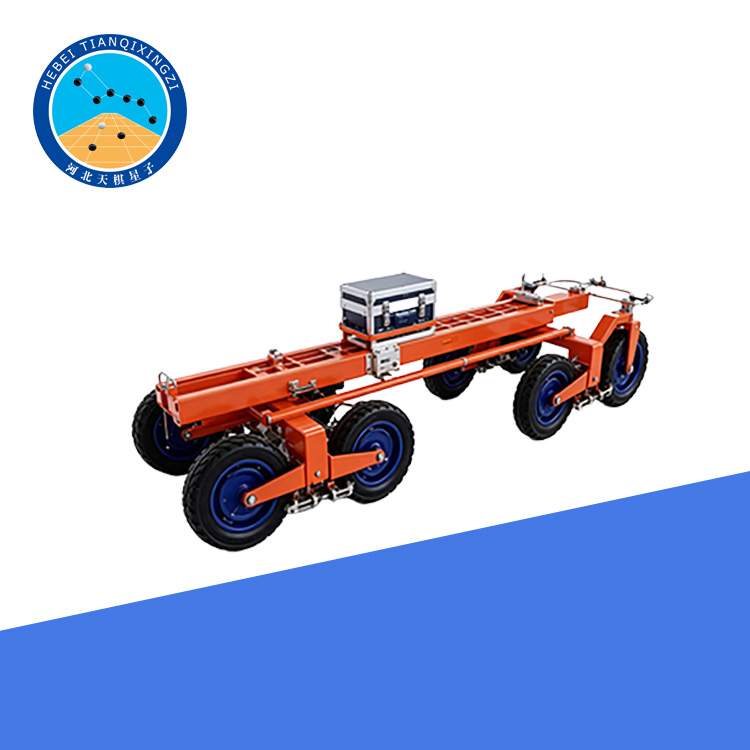

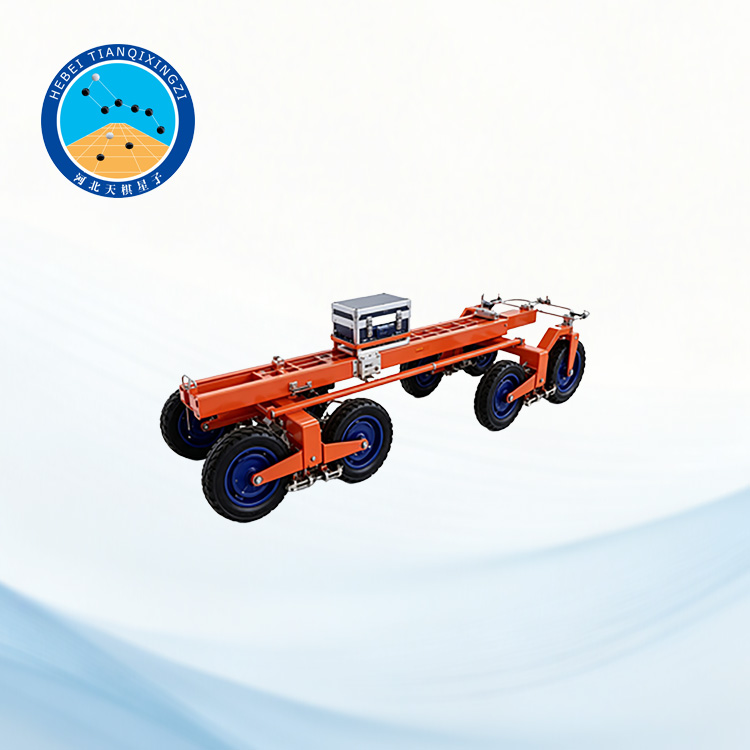
Products Description
Compared with other similar measuring instruments currently available, this instrument offers the advantages of high measurement accuracy, fast testing speed, reliable data, and scientific evaluation methods. In addition, it features simple operation and stable performance, significantly reducing labor intensity while improving work efficiency and economic benefits.
Continuous Eight-Wheel Road Roughness Tester
Model:TD932-3
I. Overview
The Road Roughness Tester adopts an advanced ARM-based microprocessor and large-scale integrated circuit (LSI) technology, which significantly improves system integration while reducing the number of unnecessary connectors used in conventional designs. This enhances the overall reliability of the instrument and ensures more stable system performance.
The instrument is equipped with a built-in real-time clock (RTC) that displays the current date and time and automatically records them during testing. A high-contrast LCD screen provides clear data display while reducing power consumption.
II. Technical Parameters
1. Reference measuring length of the road roughness tester: 3 m
2. Measurement error: ±1%
3. Operating temperature range: -10°C to +40°C
4. Overall dimensions: 4061 × 800 × 600 mm
5. Extendable length: 4061 mm
6. Retracted length: 2450 mm
7. Weight: 135 kg
8. Controller weight: 6 kg
III.Main Technical Performance
(1) Testing Functions and Accuracy
1. The instrument can automatically measure, calculate, and print the standard deviation value (σ). Two sampling intervals of 0.05 m and 0.1 m are available. The sampling error is less than 0.04 mm. Under the same testing conditions, the statistical deviation of repeated measurements is less than 0.2 mm.
2. After manual data input, the instrument can automatically print the test date (year/month/day) and the identification information of the tested road section, including road number, mileage number, station number, lane number, preset deviation limit, and sampling interval. After each printout, the summary sequence number can be automatically increased or decreased.
3. The instrument can automatically calculate and print the unidirectional cumulative value H of the tested road section (unit: mm).
4. The instrument can automatically calculate and print the graphical area value S between the profile curve of the tested road section and the reference line (unit: cm²).
5. The instrument can automatically measure, calculate, and print the length value L of the tested road section (unit: m), with an error of less than 1%.
6. The instrument can automatically measure, calculate, and print the positive and negative deviation values (K+ and K-). The deviation limit can be selected according to the pavement grade requirements, with an adjustable range of 1–15 mm.
7. The instrument can automatically measure, calculate, and print the testing speed value v (unit: km/h).
(2) Traction Method and Testing Speed
The instrument can be towed manually or by a motor vehicle. The minimum turning radius is 5 m. The recommended testing speed is 6–8 km/h, and the maximum testing speed should not exceed 12 km/h. When not performing measurements (with the frame shortened and the measuring wheel lifted), the towing speed can reach 25 km/h.
(3) Operating Temperature
Operating temperature range: -10°C to +60°C.
(4) Power Supply and Power Consumption
Power supply: Maintenance-free gel battery, 12 V / 7.2 Ah.
IV. Maintenance and Care
1. The instrument is powered by an internal rechargeable battery. After being fully charged, it can operate continuously for more than 20 hours. (Turning off the backlight can further extend the operating time.)
2. Before each use, the battery should be fully charged (normally requiring approximately 10 hours of charging).
3. If the instrument is not used for an extended period, it should be charged once every 2–3 months to prevent battery damage.
4. The Road Roughness Tester is a precision electronic instrument. Components such as sensors, the control unit, and printer should be protected from rain and moisture. When not in use, the instrument should be properly stored and powered on regularly to prevent damage.
5. Bearings and moving parts on the frame should be lubricated regularly to prevent rust and wear. Check that all connecting bolts are properly tightened before and after use. Particular attention should be paid to inspection after long-distance transportation.
6. Wear of the measuring wheel may affect measurement accuracy. After the instrument has traveled a certain distance, the wheel diameter should be checked and the wheel replaced if necessary. The standard diameter of the measuring wheel is Φ127.40 mm.
7. The instrument cable may experience open-circuit faults due to improper use. In such cases, use a multimeter to check cable continuity. The cable connection diagram is provided in the appendix. When repairing faults, broken wires must be securely soldered, and individual wires should be prevented from contacting each other to avoid affecting instrument operation.
