


 Spanish
 Russian
 Arabic

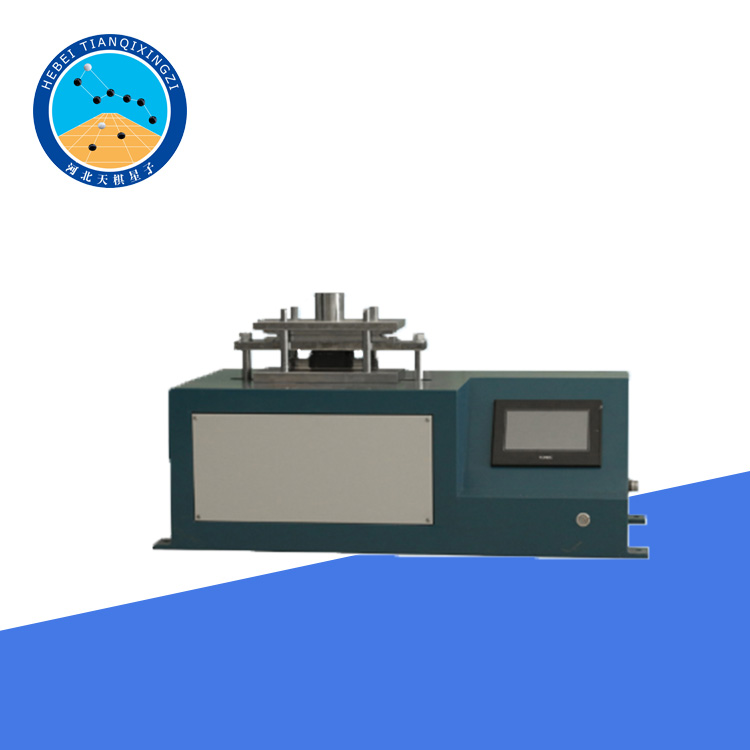

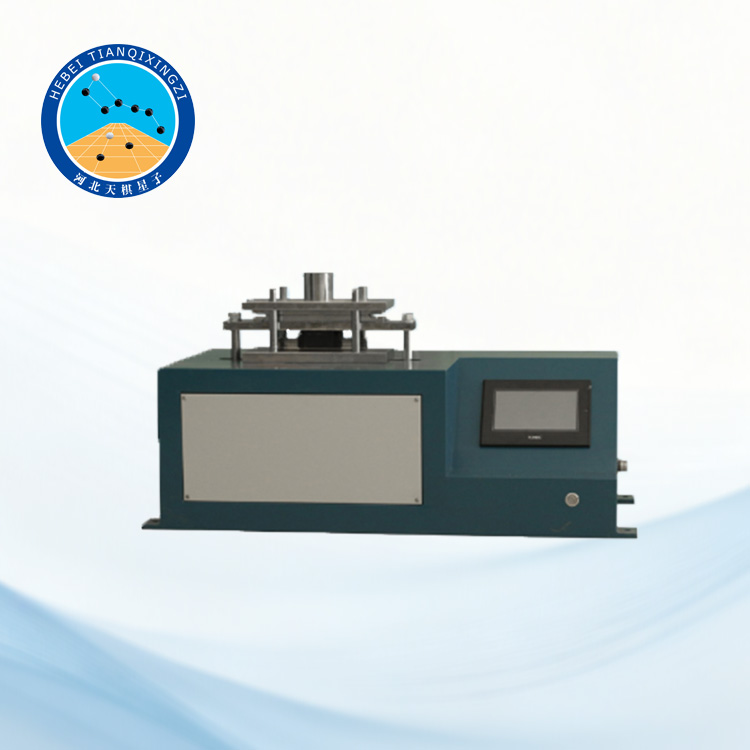
Products Description
Geotextile Abrasion Resistance Tester is designed to evaluate the abrasion resistance of woven geotextiles, nonwoven geotextiles, and related products. The tester simulates controlled friction between the specimen and an abrasive surface under specified pressure and reciprocating motion. By comparing the tensile strength before and after abrasion, it determines the percentage loss in tensile strength and provides reliable data for assessing the durability and wear resistance of geotextile materials.
Geotextile Abrasion Resistance Tester
Model: TD17636-1
I. Product Overview
This instrument is used to determine the abrasion resistance of woven geotextiles, nonwoven geotextiles, and related products. The test principle is as follows: the specimen is secured on a platform and rubbed against an abrasive with specified surface characteristics under specified pressure and abrasion conditions. The tensile strength of the specimen is measured before and after abrasion, and its abrasion resistance is evaluated based on the percentage loss in tensile strength.
Reference standards: GB/T 17636, ASTM D4886
II. Technical Specifications
1. Upper Plate: 50mm × 200mm
2. Lower Plate: a) Dimensions: 50mm × 200mm
b) Stroke: 25±1mm; Frequency: 90 times/minute
3. Sample Bearing Weight: 6±0.01 (kg)
4. Number of Friction Cycles: 2 - 99999 times, arbitrarily settable.
5. Overall Dimensions: 935×275×350 (mm)
III. Test Procedure
★ Condition the prepared specimens in the standard atmosphere specified in GB/T 6529 before testing.
★ Place the conditioned specimen on the stationary upper plate and secure both ends of the specimen with clamps. Place the abrasive material on the reciprocating lower plate and secure both ends of the abrasive with clamps.
★ Place the upper plate over the lower plate, ensuring that the specimen and abrasive material are properly aligned.
★ Apply a total load of (6 ± 0.01) kg, including the weight of the upper plate, to the upper plate.
★ Turn on the power switch and set the required number of abrasion cycles. Start the abrasion test. The tester operates at a frequency of 90 cycles per minute and abrades the specimen for 750 cycles at the specified frequency, or until the specimen is worn through. If the specimen is worn through before completing the specified number of cycles, report that the specimen was worn through and record the number of cycles at which the wear-through occurred. In case of any abnormal condition during the test, press the Stop button to stop the machine. Before starting the next test, press the Counter Reset button to reset the cycle counter to zero.
★If the sample or abrasive slips in the clamp, discard the sample, adjust and test another sample. Change the abrasive after each test, and perform tensile tests on the reference sample and the wear sample respectively according to CB/T3923.1.
IV. Calculation and Presentation of Results
Calculate the percentage loss in tensile strength for each specimen and round the result to the nearest 1%:
Tensile Strength Loss (%) = [(FA − FB) ÷ FA] × 100
Where:
FA — Breaking strength of the reference specimen, N;
FB — Breaking strength of the abraded specimen, N.
Calculate the average percentage loss in tensile strength and the coefficient of variation (CV) for the five specimens.
V. Test Report
The test report shall include the following information:
a) The number of this standard;
b) Identification of the sample in accordance with GB 14798;
c) The test direction and the face of the specimen tested;
d) The average percentage loss in tensile strength, %;
e) The coefficient of variation of tensile strength loss, %;
f) Any details deviating from the requirements of this standard, such as the number of abrasion cycles, applied load, etc.;
g) Any abnormal conditions observed during the test, such as wear-through of the specimen.
