


 Spanish
 Russian
 Arabic

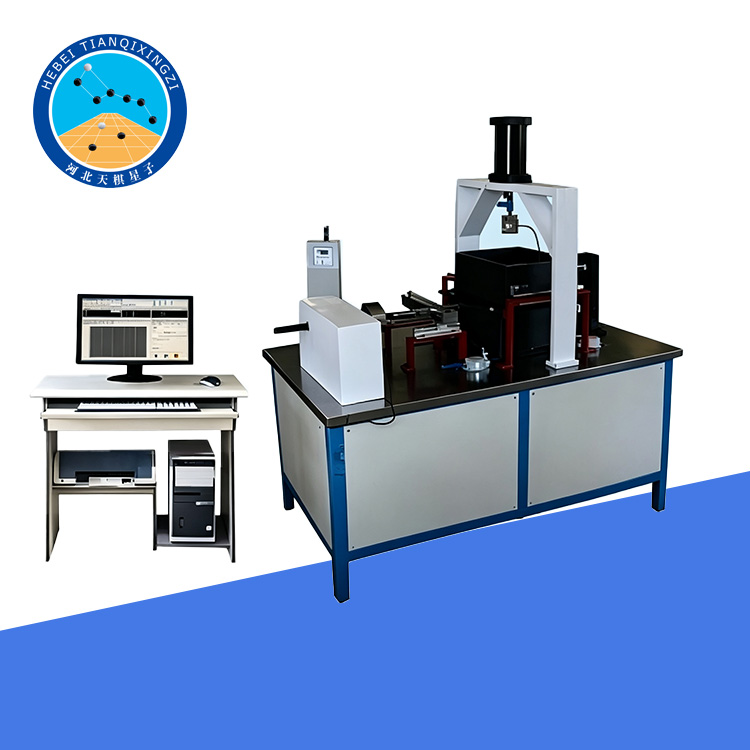

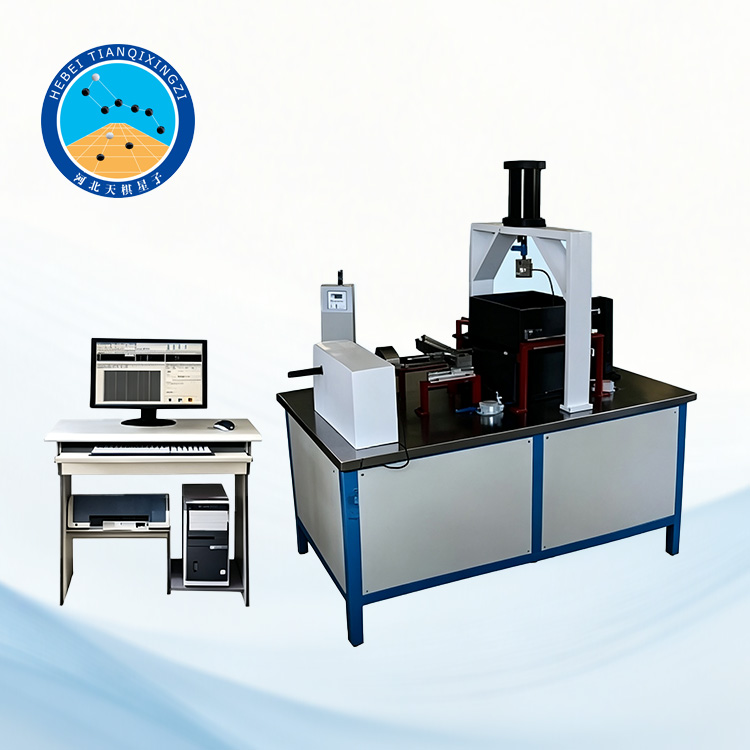
Products Description
The tester is mainly used to determine the direct shear and friction characteristics of various geosynthetic materials, including geotextiles, geomembranes, geogrids, and other related materials. It can provide detailed analysis of data variations at different stages throughout the testing process.
Geosynthetic Direct Shear and Pull-Out Friction Tester
Model: TD1130-2
I. Product Introduction
The Pull-Out Friction Characteristics Tester, also known as the Geosynthetic Pull-Out Friction Testing Machine, is a specialized testing instrument for geosynthetic materials developed by Hebei Tianqixingzi Inspection Equipment Co., Ltd. in accordance with the testing requirements of the national Test Methods for Geosynthetics, with reference to ISO 12957-1, ASTM D5321/D5321M, and ASTM D6706-01.
As an advanced testing instrument for geosynthetic materials, this tester is an ideal choice for research institutions, construction organizations, and educational institutions.
II. Technical Parameters
1. Power Supply Voltage: 220V (50HZ±1%)
2. Pressure Range: 10KN
3. Shear Box Dimensions: 300×300mm
4. Displacement Stroke: 50mm
5. Displacement Accuracy: 0.1mm
6. Shear stress accuracy: 1 kPa
7. Normal force range: 600 kPa
8. Normal force accuracy: 10 kPa
9. Stepless speed regulation: 0.1-5 mm/min
III. Test Method
1. Lay the specimen flat on a rigid horizontal base located within the lower part of the shear box, with the front end clamped in front of the shear zone. Adhesive is used to bond the specimen to the base (adhesion is not required if using a P80 alumina standard friction base). After bonding, the specimen should be flat, without folds or wrinkles. Relative slippage between the specimen and the base is not permitted during the test.
2. Install the upper shear box: Fill the upper shear box with a pre-weighed standard sand (Note: Standard sand is user-supplied) to a filling thickness of 50 mm. The sand should be evenly distributed, and the dry density after compaction should be 1750 kg/m³.
3. Install the horizontal loading device and apply a normal pressure of 50 kPa to the specimen (the reference weight provides a pressure of 50 kPa; three additional standard weights are provided, with each additional weight increasing the pressure by 50 kPa).
4. Apply a horizontal load to produce a relative displacement between the upper and lower shear boxes at a rate of 1 mm/min ± 0.2 mm/min. Continuously or intermittently measure the shear force T while recording the corresponding relative displacement ΔL at 12-second intervals. The measurement interval may be shortened at the beginning of the test if necessary. Continue the test until the relative displacement reaches 16.5% of the length of the shear plane, then terminate the test.
5. Operating Steps for the LCD Display
1. Turn on the power switch.
2. Press the Function key to start a new test.
3. Enter the required test speed, then press the Confirm key.
Display parameters: Shear Force, Shear Stress, Peak Value, and Displacement.
4. Press the Start key to begin the test. The normal stress is applied incrementally. The first test is conducted at 50 kPa, and if the result is valid, the system automatically proceeds to the next normal stress levels of 100 kPa, 150 kPa, and 200 kPa.
5. The displacement measurement starts automatically. When the displacement reaches 16.5% of the total contact surface length, the test is completed and the machine automatically stops. The test results are displayed on the screen. If the test result is valid, press the Confirm key.
6. Press the Function key to open the Result Query function. The test results will be displayed on the screen.
7. Press the Confirm/Print key to print the test results. The printer will start printing automatically.
IV. Main Features
1. Microcomputer-Controlled Operation: The tester adopts a microcomputer-controlled system with an LCD display for convenient operation and real-time monitoring of test data.
2. Wide Application Range: It is suitable for direct shear and friction characteristic testing of geotextiles, geomembranes, geogrids, geocomposites, and other geosynthetic materials.
3. Automatic Loading and Testing: The system can automatically apply the preset normal stress and perform the shear test according to the selected test speed.
4. Real-Time Data Monitoring: Shear force, shear stress, peak value, displacement, and other test parameters can be displayed and monitored during the test.
5. Automatic Data Recording: Test data can be automatically recorded throughout the testing process, making it convenient for subsequent analysis and result evaluation.
6. Automatic Test Sequence: The tester can automatically perform tests under different normal stress levels, reducing manual intervention and improving testing efficiency.
7. Data Printing: The built-in printing function allows test results to be printed directly after completion of the test.
