


 Spanish
 Russian
 Arabic

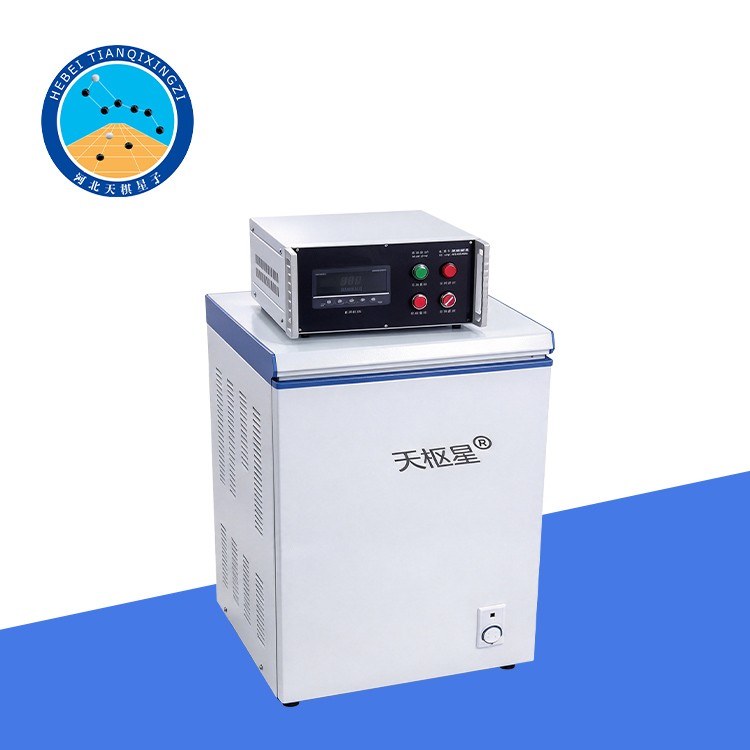

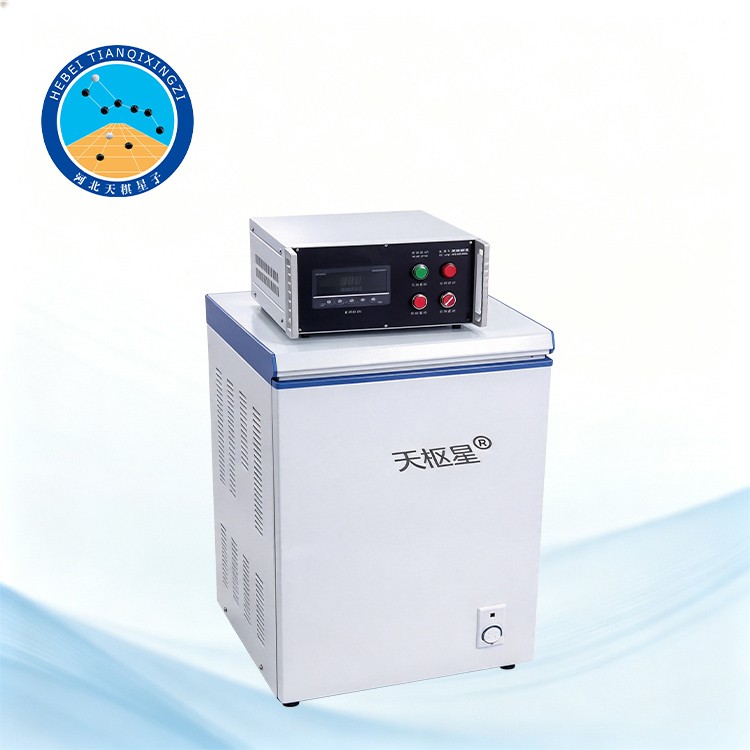
Products Description
The Concrete Coefficient of Thermal Expansion Tester evaluates the thermal expansion behavior of concrete by monitoring changes in specimen length under controlled temperature conditions. During testing, the specimen is placed in a temperature-controlled water bath, where its temperature is adjusted according to the specified test procedure. Differential resistance strain gauges are used to measure strain changes as the specimen temperature changes. Temperature readings and strain measurements are then used to determine the coefficient of linear thermal expansion.
Concrete Coefficient of Thermal Expansion Tester
Model: TD577-1
I. Product Overview
The Concrete Coefficient of Linear Thermal Expansion Tester is designed in accordance with DL/T 5150-2001, Test Code for Hydraulic Concrete, SL 352-2006, Test Code for Hydraulic Concrete, and DL/T 5362-2006, Test Code for Hydraulic Asphalt Concrete. It is primarily used to determine the coefficient of linear thermal expansion of concrete and can also be used for asphalt and other suitable materials.
Reference Standard: AASHTO T 336-22
The Concrete Coefficient of Linear Thermal Expansion Tester is suitable for laboratory-prepared specimens and field-drilled concrete cores. It is widely used in construction quality inspection, teaching, and scientific research. The instrument features fully automatic touchscreen control, offering easy operation, stable and reliable performance, and high measurement accuracy.
II. Technical Specifications
1. Automatic Constant-Temperature Water Bath: The water level should be approximately 50 mm above the top of the specimen cylinder. The temperature is controlled within ±0.5°C.
2. Cooling Rate: Adjustable and controlled by the refrigeration unit.
3. Number of Specimens: Customizable according to customer requirements.
4. Measurement System: Differential resistance strain gauges with a gauge length of 250 mm.
5. Digital Strain Bridge: Used to measure resistance strain values.
6. Thermometer: Measuring range of 0–100°C, with a display resolution of 0.1°C.
7. Specimen Rack: Diameter of 200 mm and height of 500 mm, or a covered galvanized sheet metal cylinder.
III. Applications
The TD577-1 is designed for laboratory testing and research involving the thermal expansion characteristics of concrete and other suitable construction materials.
Typical applications include:
Concrete Thermal Expansion Testing: Determining the linear thermal expansion coefficient of concrete specimens.
Concrete Core Testing: Evaluating the thermal expansion characteristics of cores drilled from existing concrete structures, where specimen dimensions and preparation meet the applicable test requirements.
Hydraulic Concrete Research: Supporting studies of concrete used in dams, hydraulic structures, and other water-related engineering projects.
Asphalt Material Research: Supporting thermal deformation studies of suitable asphalt materials when the specimen configuration and test procedure are appropriate.
Construction Quality Inspection: Providing measurement data for material evaluation and comparative testing.
Teaching and Scientific Research: Supporting laboratory experiments involving temperature-related deformation of construction materials.
IV. Importance of Measuring the Thermal Expansion Coefficient of Concrete
Concrete expands when its temperature increases and contracts when its temperature decreases. The magnitude of this dimensional change depends on factors such as aggregate type, mixture composition, moisture condition, and temperature range.
The coefficient of linear thermal expansion is an important material parameter in concrete pavement design, hydraulic concrete engineering, and the assessment of temperature-related deformation in concrete structures.
Reliable measurements help engineers and researchers understand how concrete responds to temperature changes, compare the thermal properties of different mixtures, and obtain data for engineering analysis and material research.
For hydraulic structures and concrete pavements, thermal expansion data can contribute to the evaluation of temperature-induced stresses and dimensional changes when considered alongside other relevant material and structural parameters.
V. Technical Support and Customization
The TD577-1 Concrete Coefficient of Thermal Expansion Tester can be configured according to customer requirements, including the number of specimens to be tested.
Before ordering, customers are encouraged to confirm the required specimen dimensions, test method, temperature-control requirements, measurement configuration, and intended material applications.
For product specifications, quotations, and technical assistance, please contact our team. We can help evaluate whether the TD577-1 is suitable for your laboratory testing or research requirements.
