


 Spanish
 Russian
 Arabic


Products Description
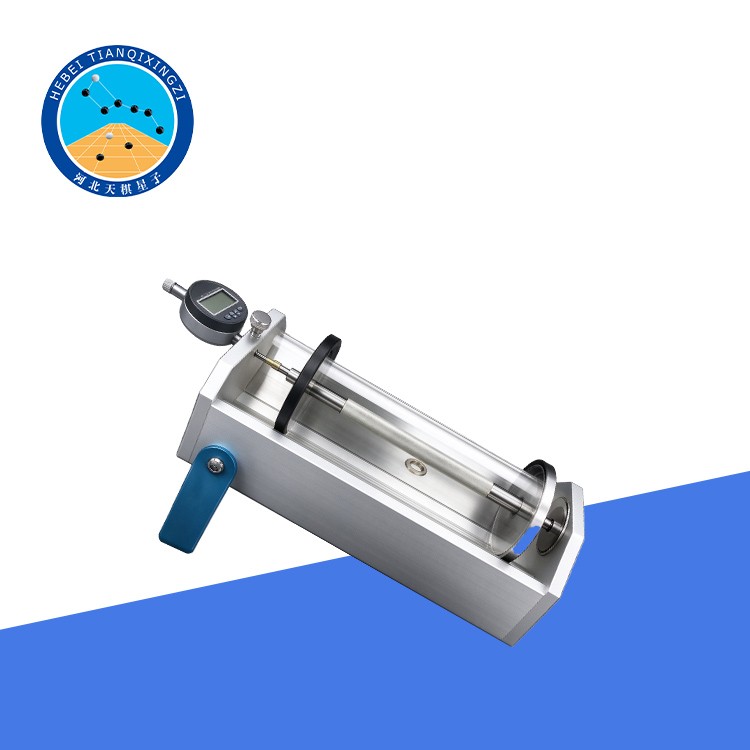
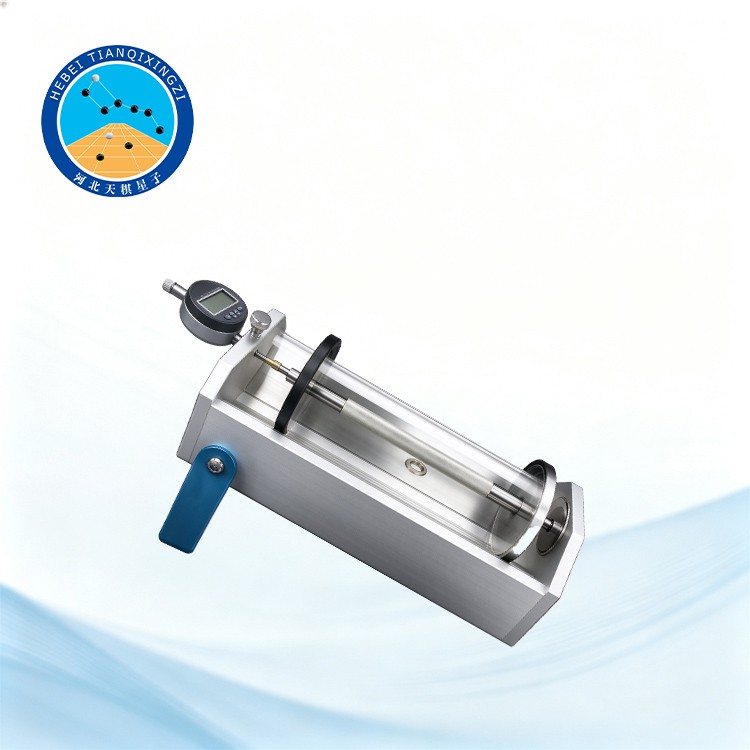
The Concrete Restrained Expansion Rate Tester is designed to measure the longitudinal length changes of concrete specimens, including expansion and drying shrinkage. The test is performed by comparing the specimen's measured length with a reference length established using the standard rod.
Concrete Restrained Expansion Rate Tester
Model: TD576-1
I. Product Overview
The Compensating Concrete Shrinkage and Expansion Rate Tester is designed in accordance with GB 50119-2003, Technical Code for Application of Concrete Admixtures. It is primarily used to measure the longitudinal expansion rate and longitudinal drying shrinkage rate of shrinkage-compensating concrete, helping determine the appropriate dosage of concrete expansive agents for engineering applications. The instrument features simple operation and convenient readings.
Reference Standards: ASTM C878/C878M-22, ASTM C157/C157M-24e1
II. Technical Specifications
Measurement Range: 350–360 mm
Standard Rod Length: 355 ± 0.02 mm
Dial Indicator Range: 0–10 mm, accuracy ± 0.001 mm
Specimen Mold Dimensions: 100 × 100 × 400 mm
Overall Dimensions: 500 × 135 × 100 mm
Weight: Approximately 17 kg
III. Product Structure
1. The instrument consists of a base, support legs, a standard rod, a dial indicator, and other components.
2. The base features a V-shaped groove design, providing good centering and making it easy to position the test specimen. It is used to support the test specimen and the standard rod.
3. The support legs feature a hinged design. When extended, they allow the instrument to maintain a 30° inclination on a flat surface. When not in use, the legs can be folded away for convenient storage.
4. The standard rod serves as the reference length for the instrument. It is used to calibrate the instrument and set the position of the dial indicator.
IV. Operating Procedure
1. Three hours before use, place the instrument and the standard rod in a measurement room maintained at 20°C ± 2°C. Extend the support legs.
2. Before measurement, place the standard rod and support plate together in the V-shaped groove to calibrate the instrument's length. Loosen the dial indicator locking screw and adjust the position of the dial indicator until the end face of the measuring contact lightly touches the spherical end of the standard rod. Tighten the locking screw to secure the dial indicator. Zero the dial indicator, then remove the standard rod.
3. Place the concrete specimen in the same manner as the standard rod.
4. The preparation, curing, measurement, and calculation of concrete specimens may be carried out in accordance with the relevant clauses or appendices of GB 50119-2003, Technical Code for Application of Concrete Admixtures.
V. Precautions
1. Place the instrument on a level workbench and ensure that it is securely supported.
2. Handle the standard rod carefully. Avoid damaging the spherical ends or bending or deforming the rod.
3. The dial indicator is a precision component. Handle the specimen carefully when placing it into or removing it from the instrument, and avoid striking the indicator stem. After use, remove the dial indicator and store it in its protective case. Check the battery level regularly and replace the battery with one of the same type if incorrect readings occur or the display cannot be zeroed. Apply instrument oil to the indicator stem.
4. During testing, do not touch the standard rod directly with your hands. Hold it by its outer sleeve to prevent body heat from affecting the temperature of the standard rod.
5. After each use, apply a small amount of lubricating oil to all unpainted surfaces and take appropriate measures to prevent dust accumulation. Clean the measuring contact of the movable frame and the dial indicator, then apply a small amount of watch oil. During testing, ensure that the dial indicator's measuring contact touches the specimen slowly and smoothly. Do not push the indicator stem beyond its maximum measuring range or subject it to sudden impacts, as this may affect the indicator's sensitivity and service life.
VI. Applications
The tester is suitable for laboratory testing of shrinkage-compensating concrete and other concrete mixtures requiring the evaluation of longitudinal expansion and shrinkage.
Typical applications include:
Concrete expansive admixture evaluation: Measuring the expansion characteristics of concrete containing expansive agents.
Drying shrinkage testing: Monitoring length changes during concrete drying and curing.
Concrete mix design: Providing test data to support the selection and adjustment of expansive admixture dosages.
Construction materials research: Supporting research into concrete dimensional stability and volume-change behavior.
Quality control and laboratory testing: Comparing the length-change characteristics of different concrete mixtures under controlled testing conditions.
VII. Product Features and Advantages
1. Simple and Practical Operation
The instrument features a straightforward mechanical structure and a dial indicator for convenient measurement of specimen length changes.
2. Reference Rod for Length Calibration
The standard rod provides a reference length for instrument calibration and helps establish a consistent starting point for measurements.
3. V-Shaped Positioning Base
The V-shaped groove facilitates specimen positioning and helps maintain consistent alignment during measurement.
4. Adjustable Support Legs
The hinged support legs allow the instrument to be inclined at approximately 30° during use and folded away for convenient storage.
5. Suitable for Laboratory Dimensional Stability Testing
The instrument provides a practical solution for measuring longitudinal expansion and drying shrinkage in concrete specimens, supporting comparative testing and concrete materials research.
