


 Spanish
 Russian
 Arabic


Products Description
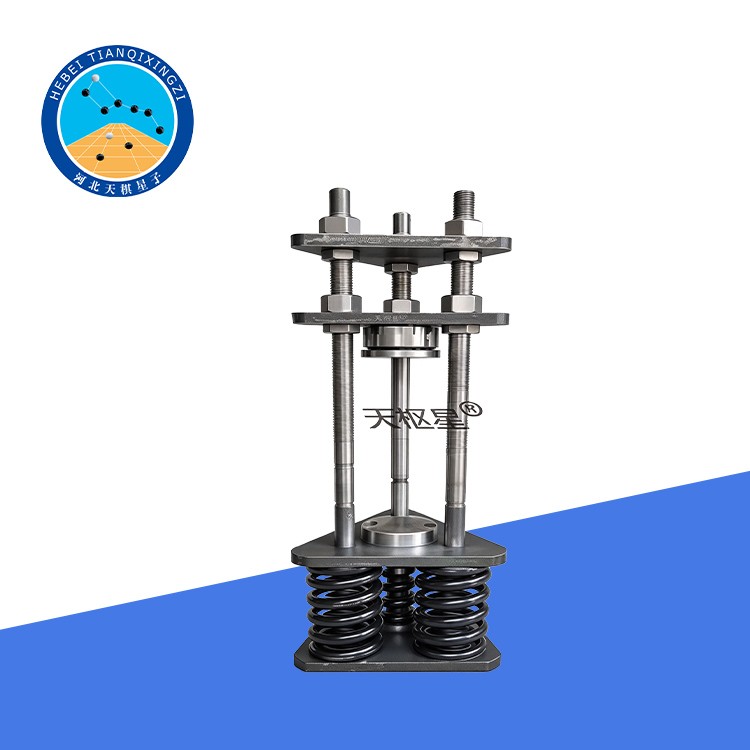
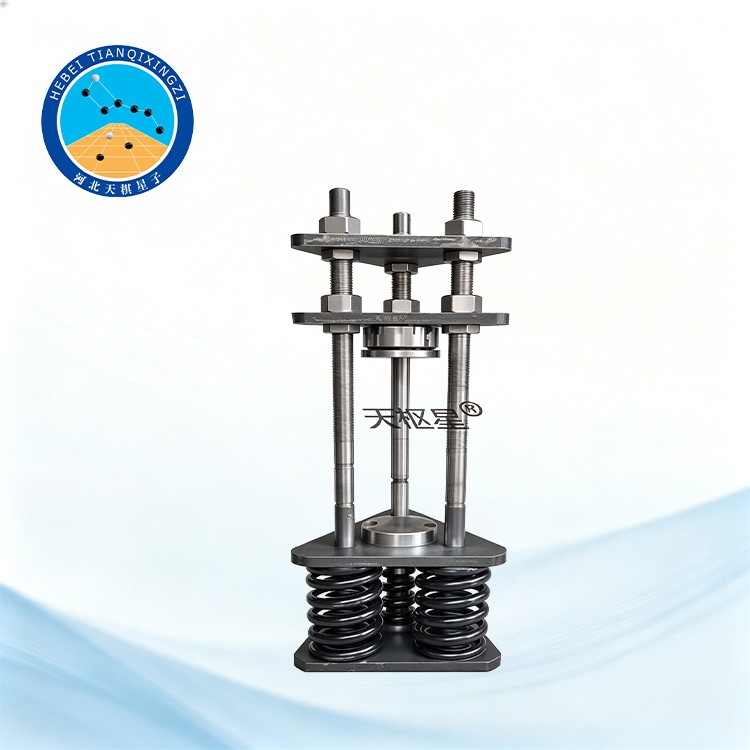
The Manual Concrete Compressive Creep Tester is designed to evaluate the long-term deformation of concrete under sustained compressive loading. It is suitable for studying the creep behavior of concrete and assessing its long-term deformation characteristics under specified loading and environmental conditions.
Manual Concrete Compressive Creep Tester
Model: TD578-1
I. Product Introduction
The instrument is designed with reference to GB/T 50082, JTG/T 0578, and SL 352. It can be used in concrete testing laboratories, construction quality inspection, academic research, and building materials studies.
By monitoring changes in specimen deformation over time under sustained compressive stress, the tester helps researchers and engineers analyze concrete creep behavior, evaluate long-term structural performance, and support concrete mix design and material performance studies.
Reference Standards: ASTM C512/C512M-24, BS EN 12390-17:2019
II. Product Features
1. Inner and Outer Dual-Spring Design: The dual-spring structure facilitates spring positioning and ensures uniform spring force on the specimen.
2. High-Quality Spring Material: The springs are manufactured from high-quality 60Si2Mn spring steel, offering high strength, long fatigue life, and minimal permanent deformation.
3. Optimized Loading Frame: The optimized frame design makes it easy to position the specimen and loading device, secure the sensor, level the equipment, and perform testing.
4. Secure Base Fixing: The bottom of the loading frame is equipped with anchor fixing devices to ensure safe and stable operation during testing.
5. High-Strength Bearing Plates: The bearing plates are made of high-strength steel, providing high rigidity and stable performance.
6. Integrated Transportation: The equipment is transported as a fully assembled unit. After lifting and securing it in place, the user can proceed with testing.
7. Complete Accessories: The instrument is supplied with the necessary accessories, allowing testing to begin after on-site installation and setup.
III. Technical Parameters
1. Maximum test force: 500 kN
2. Spring height: 430 mm
3. Compression stroke: >20 mm
4. Specimen dimensions: 100×100×400 mm and 150×150×(450–600) mm
5. Frame dimensions: 630×630×2000 mm
IV. Working Principle
The TD578-1 Manual Concrete Compressive Creep Tester operates by applying a sustained compressive load to a concrete specimen through a spring-based loading system. The specimen is maintained under the specified loading conditions, and its deformation is measured at predetermined time intervals.
By recording the changes in specimen deformation over an extended period, the creep behavior of concrete can be evaluated. The test data can be used to analyze the relationship between sustained compressive stress and time-dependent deformation, providing useful information for concrete material research and long-term structural performance assessment.
V. Applications
The tester is suitable for long-term compressive creep testing of concrete specimens in laboratories and research facilities. Typical applications include:
Concrete creep testing: Evaluating time-dependent deformation under sustained compressive loading.
Building materials research: Investigating the long-term mechanical behavior of different concrete mixtures.
Concrete mix design: Comparing the creep characteristics of concrete mixtures with different material compositions.
Construction quality research: Supporting the evaluation of concrete deformation characteristics relevant to structural performance.
Academic and laboratory testing: Providing test equipment for civil engineering research, university laboratories, and materials testing institutions.
VI. Importance of Concrete Compressive Creep Testing
Concrete creep refers to the gradual deformation that develops over time when concrete is subjected to sustained stress. It is an important consideration in the long-term behavior of concrete structures, particularly in elements exposed to continuous loading.
Creep testing helps engineers and researchers understand time-dependent deformation and investigate factors that may influence long-term structural performance. The results can support material selection, concrete mixture evaluation, and engineering analysis.
For meaningful comparisons, specimens should be prepared, cured, loaded, and measured under consistent conditions in accordance with the applicable test method.
VIII. Installation and Testing Considerations
The TD578-1 is supplied as an assembled loading frame to facilitate transportation and on-site installation. Before testing, the equipment should be placed on a suitable, level foundation and securely fixed in accordance with the manufacturer's instructions.
The specimen should be correctly positioned between the bearing plates, and the loading system and measuring devices should be checked before applying the test load. During long-term testing, loading conditions, environmental conditions, and deformation readings should be recorded consistently.
Because creep testing involves extended measurement periods, proper specimen preparation, stable loading conditions, and regular observation are important for obtaining reliable and comparable results.
