


 Spanish
 Russian
 Arabic


Products Description
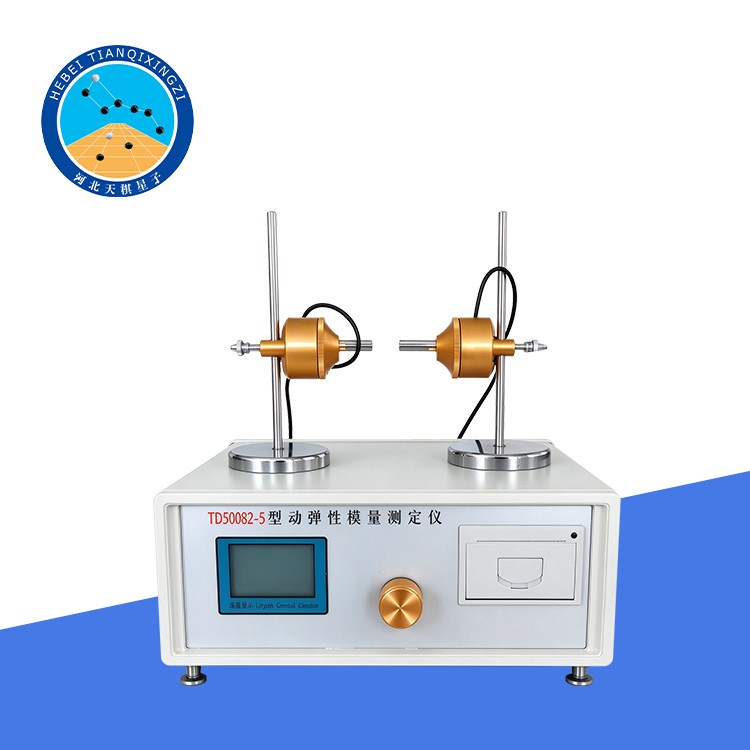
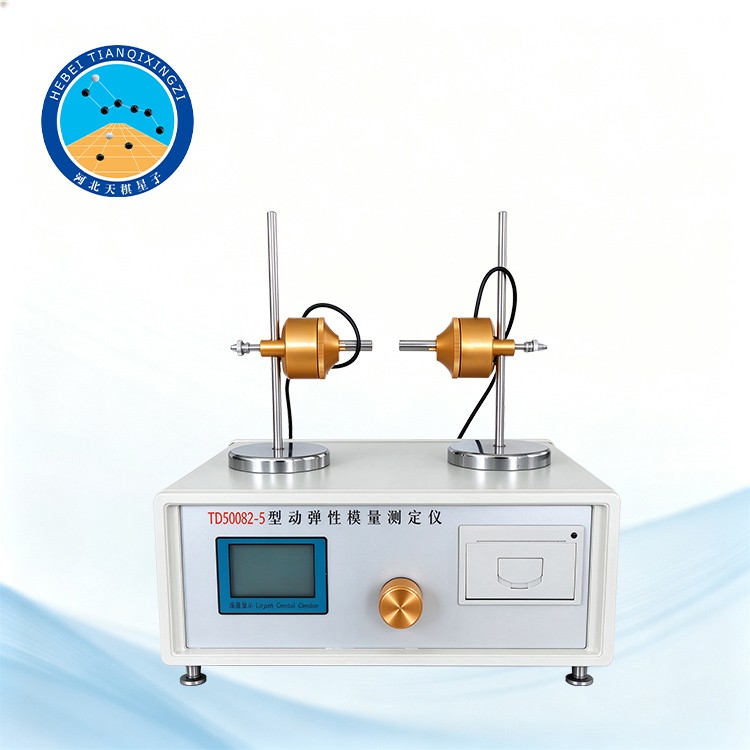
The Concrete Dynamic Modulus of Elasticity Tester is particularly suitable for evaluating the deterioration of concrete during freeze-thaw cycles and other durability tests. Changes in resonant frequency and dynamic modulus can be used to assess the development of internal damage, such as microcracking and loss of structural integrity.
Concrete Dynamic Modulus of Elasticity Tester
Model: TD50082-5
I. Testing Principle
The TD50082-5 Concrete Dynamic Modulus of Elasticity Tester is developed by Hebei Tianqixingzi Inspection Equipment Co., Ltd. with reference to GB/T 50082-2009, Standard for Test Methods of Long-Term Performance and Durability of Ordinary Concrete. The instrument determines the elastic response of concrete under dynamic excitation by measuring its resonant response. It reflects the stiffness of concrete under high-frequency vibration and is more sensitive to internal defects such as microcracks and pores, making it more effective for evaluating the actual service performance of concrete.
Reference Standard: ASTM C215-19
II. Applications
The Concrete Dynamic Modulus of Elasticity Tester is suitable for durability testing of concrete, polymer-modified mortar, and other cement-based materials. It determines the resonant frequency of concrete or mortar specimens under a specific vibration mode and then calculates their dynamic modulus of elasticity.
The tester can be used with standard specimens, such as Ø150 mm × 300 mm modulus of elasticity specimens and 100 mm × 100 mm × 400 mm flexural specimens, as well as freeze-thaw testing chambers. It can be used to evaluate the degree of damage to concrete during freeze-thaw cycles or chemical attack.
The instrument is also suitable for measuring the dynamic modulus of elasticity of various non-metallic and metallic materials, including concrete, carbon materials, slate, brick, glass, steel, copper, and aluminum. It can be applied in metallurgy, construction, bridge engineering, hydropower, and other fields.
III. Product Features
The TD50082-5 Dynamic Modulus of Elasticity Tester is a specialized instrument for determining the dynamic modulus of elasticity of concrete and carbon materials. It adopts a microcontroller-based control system and integrated circuit technology for data processing, enabling automatic operation throughout the entire testing and calculation process.
IV. Technical Specifications
1. Frequency measurement range: 100 Hz – 20 kHz.
2. Measurement error: <2%.
3. Frequency sensitivity: 1 Hz.
4. Output power: 0–15 W.
5. Output mode: A: LCD menu display.
B: Printer output
C: Communicates with a computer; equipped with dedicated analysis software
6. Environmental conditions: 0–40°C; relative humidity <90%.
7. Operating time: Capable of continuous operation for 8 hours.
8. Power supply: AC 220V ±10%, 50Hz, <60W.
V. Testing Method
The tester determines the dynamic modulus of elasticity by measuring the resonant frequency of a specimen under a specified vibration mode. During testing, the specimen is excited at its natural frequency, and the corresponding resonant frequency is measured by the instrument. The measured frequency is then used to calculate the dynamic modulus of elasticity of the material.
The resonance-based testing method is non-destructive and can be used to evaluate changes in the internal condition and dynamic mechanical properties of concrete specimens during durability testing.
VI. Applications and Industries
The Concrete Dynamic Modulus of Elasticity Tester is suitable for:
Concrete durability testing;
Freeze-thaw damage evaluation;
Dynamic modulus testing of concrete and mortar;
Polymer-modified mortar testing;
Research on concrete deterioration and durability;
Dynamic property testing of carbon materials;
Testing of stone, brick, glass, and other non-metallic materials;
Dynamic modulus testing of steel, copper, aluminum, and other materials.
Typical users include construction material laboratories, universities, research institutes, quality inspection laboratories, bridge engineering laboratories, hydropower laboratories, and metallurgy laboratories.
VII. Advantages
1. Resonance-based testing: Determines the dynamic modulus of elasticity from the resonant frequency of the specimen.
2. Automatic testing and calculation: The microcontroller-based system automatically processes measurement data and calculates test results.
3. Wide frequency range: Frequency measurement from 100 Hz to 20 kHz supports testing of different material types and specimen configurations.
4. Multiple output options: Test information can be displayed on the LCD, printed, or transferred to a computer for analysis.
5. Suitable for durability research: Particularly useful for monitoring changes in concrete properties during freeze-thaw and other durability tests.
6. Wide material compatibility: Can be used for concrete, mortar, carbon materials, stone, brick, glass, and selected metallic materials.
7. Continuous operation: Designed for laboratory testing with continuous operation for up to 8 hours.
