


 Spanish
 Russian
 Arabic


Products Description
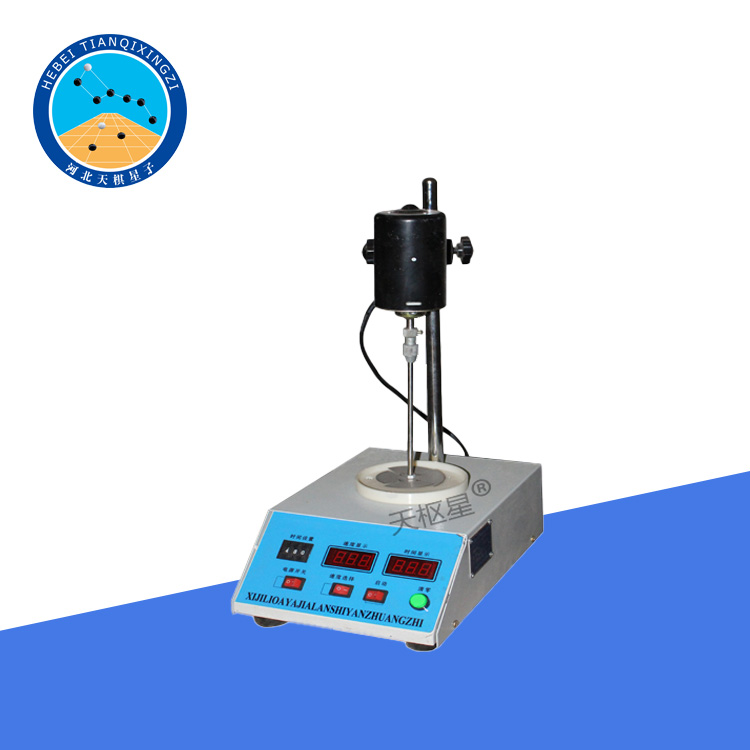
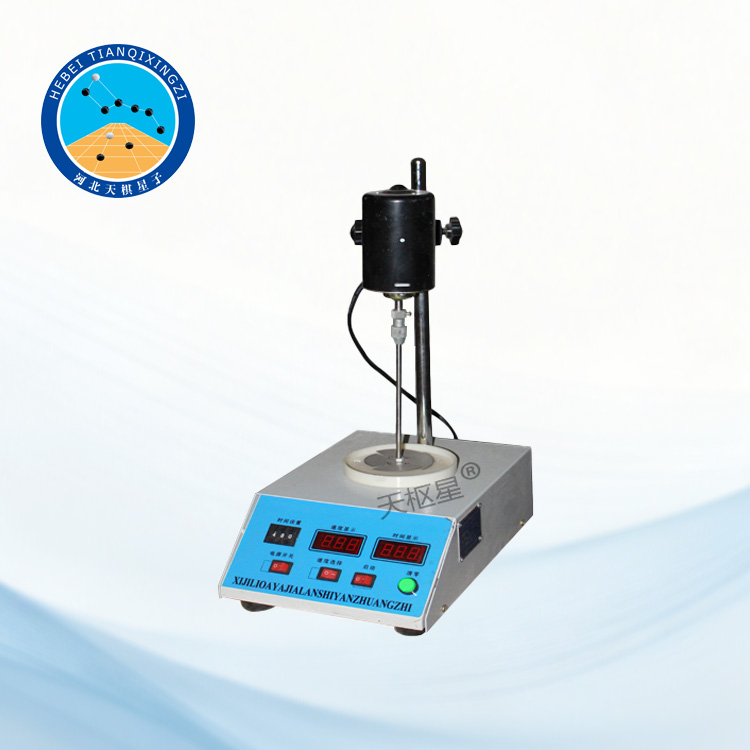
Fine Aggregate Methylene Blue Value Tester is designed to determine the methylene blue value (MBV) of fine aggregates and evaluate the content of clay minerals and harmful fines. It is widely used in highway, construction, and aggregate testing laboratories to assess aggregate cleanliness and quality. The apparatus complies with JTG E42 T0349, with reference to EN 933-9, providing accurate and reliable testing results for fine aggregate performance evaluation.
Fine Aggregate Methylene Blue Value Tester
Model:TD349-1
I. Product Introduction
This instrument is a specialized testing apparatus designed in accordance with the Ministry of Transport standard T0349-2005 — Methylene Blue Test for Fine Aggregate, with reference to EN 933-9. It adopts advanced frequency conversion and digital control technologies to improve testing accuracy and efficiency. It is an essential instrument for laboratory testing.
This method is applicable for determining the presence of expansive clay minerals in fine aggregate and measuring their content. The cleanliness of the aggregate can be evaluated by the Methylene Blue Value (MBV).
II. Scope of Application
This method is applicable to fine aggregates with particle sizes smaller than 2.36 mm or 0.15 mm, and can also be used for the quality inspection of mineral filler.
When the passing percentage of particles smaller than 0.075 mm in the fine aggregate is less than 3%, this test may be omitted, and the material may be considered as meeting the requirements.
III. Technical Parameters
Power Supply Voltage: 220 V
Maximum Rotating Speed: 600 rpm ± 10 rpm
Minimum Rotating Speed: 400 rpm ± 10 rpm
Impeller Diameter: 75 mm ± 10 mm
Number of Impellers: 4 pcs
Beaker Capacity: 1000 mL
Impeller Diameter: 75 mm ± 10 mm
IV. Test Procedure of Fine Aggregate Methylene Blue Test Apparatus
1. Time Setting:
Turn on the power supply and first press the “Time Setting” coding switch. The time display will show three digits. The maximum setting time is 999 seconds.
For example, if the mixing time is set to 8 minutes, set the coding switch to 480. After mixing for 8 minutes, the instrument will automatically stop.
If additional mixing for 4 minutes is required, set the coding switch to 240 and press the reset switch. The instrument will restart operation and automatically stop after mixing for 4 minutes.
After each mixing cycle is completed, the instrument will automatically give an audible buzzer alarm.
2. Speed Setting:
After the instrument is powered on, toggle the “Speed Selection” switch to select the required rotation speed. The speed can be switched between 600 rpm and 400 rpm.
3. Starting the Instrument:
After the time and speed settings have been completed, press the start switch to begin the mixing operation. If the mixing process is stopped during operation, press the start switch again to resume operation.
V. Determination of Methylene Blue Adsorption Capacity
(1) Place the filter paper horizontally on the top of an open beaker, ensuring that it does not come into contact with any other objects.
(2) After adding the methylene blue solution to the fine aggregate suspension and stirring at a speed of 400 rpm ± 40 rpm for 1 minute, perform the first color halo test on the filter paper.
Use a glass rod to take a drop of the suspension and place it onto the filter paper. The drop should form a circular mark on the filter paper, with aggregate sediment in the center. The amount of suspension should be sufficient to form a sediment spot with a diameter of 8 mm to 12 mm. A ring of clear, colorless water should surround the sediment.
When a light blue halo with a width of approximately 1 mm appears around the edge of the sediment, the test result is considered positive.
(3) If no color halo appears around the sediment after the first addition of 5 mL of methylene blue solution, add another 5 mL of methylene blue solution to the suspension and continue stirring for 1 minute. Then use a glass rod to take a drop of the suspension and place it onto the filter paper for the second color halo test. If no color halo appears around the sediment, repeat the above procedure until a stable light blue halo with a width of approximately 1 mm radiates around the sediment.
(4) Stop adding methylene blue solution, but continue stirring the suspension. Perform the color halo test once every 1 minute. If the halo disappears within the first 4 minutes, add another 5 mL of methylene blue solution. If the halo disappears at the 5th minute, add another 2 mL of methylene blue solution. In both cases, continue stirring and performing the color halo test until the halo remains visible for 5 minutes.
(5) Record the total volume of methylene blue solution added when the color halo remains visible for 5 minutes, with an accuracy of 1 mL.
