


 Spanish
 Russian
 Arabic

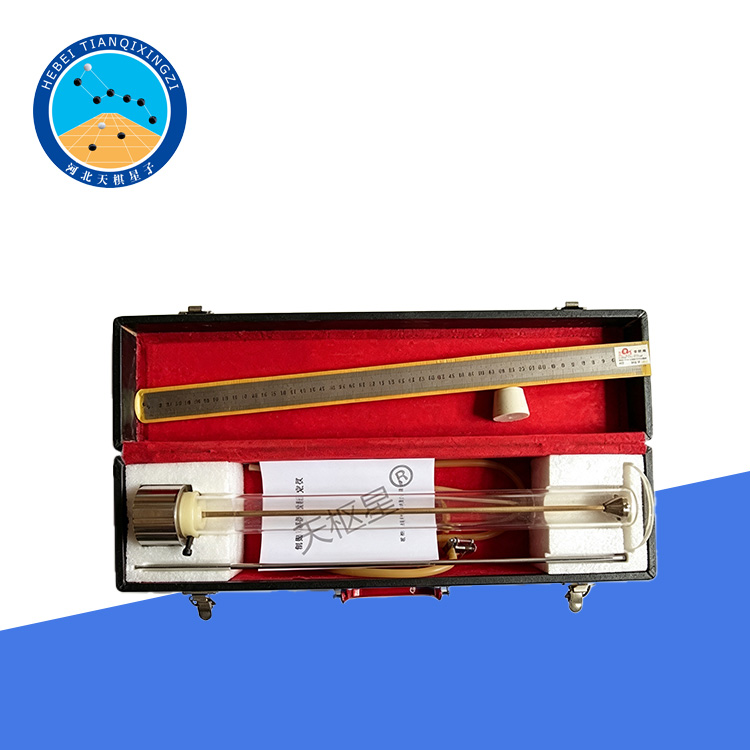

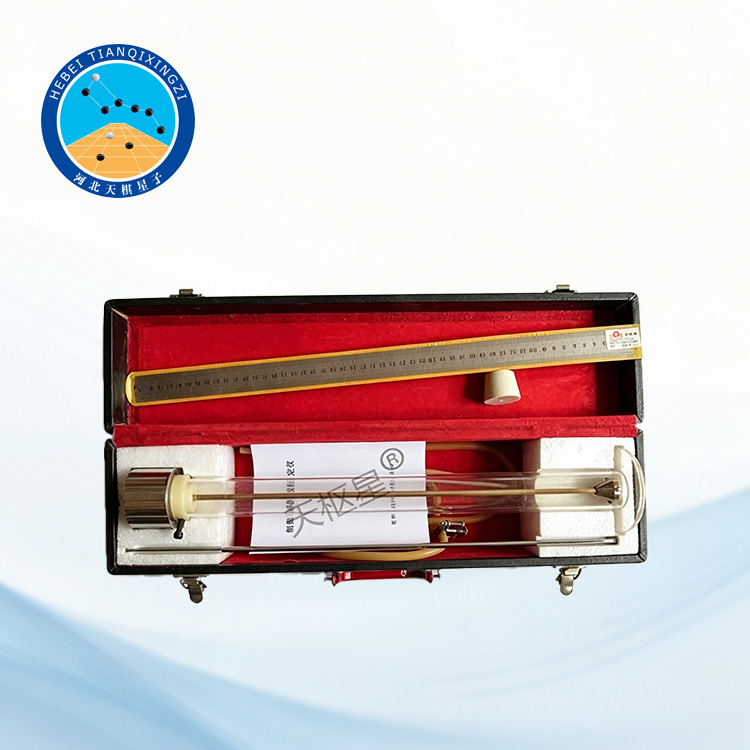
Products Description
This product is used to determine the content of clay-like materials and impurities contained in various fine aggregates, including natural sand, manufactured sand, and stone dust, with a maximum particle size of not exceeding 4.75 mm, in order to evaluate the cleanliness of aggregates. The Sand Equivalent Value is represented by SE.
Manual Sand Equivalent Test Apparatus
Model:TD0334-1
I. Product Introduction
The Manual Sand Equivalent Test Apparatus is developed and manufactured by our company in accordance with the Chinese industry standard issued by the Ministry of Transport of the People's Republic of China: JTG E42-2005 “Test Methods of Aggregate for Highway Engineering”, specifically T0334-2005 “Sand Equivalent Test for Fine Aggregate.”
Applicable or Reference Standards:
ASTM D2419, AASHTO T 176, EN 933-8, NF P18-598, UNE 83131
II. Technical Parameters
Counterweight Piston: 1kg±5g
Plastic Test Cylinder: Inner Diameter 32mm±0.25mm, Height 420mm
Rinsing Tube: Outer Diameter 6mm±0.5mm, Inner Diameter 4mm±0.2mm
III. Preparation of Solution
The solution is prepared according to the ratio of anhydrous calcium chloride (g) : distilled water volume (mL) = 1 : 2.
When calcium chloride dissolves in water, heat is released, causing the solution temperature to rise. After the solution cools to room temperature, filter it through filter paper to remove insoluble impurities. The filtered high-concentration solution shall be stored for later use. The calcium chloride content in this solution is 410 g/L.
1. Preparation of Concentrated Solution (1 L)
(1) Measure 272 mL of the high-concentration calcium chloride solution using a measuring cylinder.
(2) Weigh 484.8 g of glycerol using a balance.
(3) Weigh 13.6 g of formaldehyde using a balance.
(4) Transfer the above three reagents into a 1 L measuring cylinder. During transfer, use a small amount of distilled water to rinse the containers holding each reagent, and add the rinsing liquid into the measuring cylinder.
(5) Pour the prepared 1 L solution into a 2 L beaker or measuring cylinder, mix thoroughly, and store it for use.
2. Preparation of Washing Solution
Measure 62.5 mL ± 0.5 mL of the concentrated solution prepared for the test and transfer it into a 5 L plastic container or bottle. Dilute it with distilled water to a total volume of 2.5 L ± 0.005 L.
IV. Test Method
1. Purpose and Scope of Application
(1) This method is applicable for determining the content of clay-like materials and impurities contained in fine aggregates and evaluating the cleanliness of aggregates. The result is expressed as the Sand Equivalent Value (SE).
(2) This method is applicable to natural sand, manufactured sand, and stone dust used in asphalt mixtures and cement concrete. The maximum particle size of the aggregate shall not exceed 4.75 mm (5 mm round-hole sieve).
2. Apparatus and Reagents
The following instruments and equipment are required for this test:
TD334-1 Manual Sand Equivalent Test Apparatus
Plastic Container (5 L): The container shall be equipped with a rubber stopper fitted with a siphon tube. The bottom of the container shall be approximately 1.5 m above the workbench surface.
Balance: Capacity: 1 kg; readability: 1 g.
Oven: Capable of maintaining a temperature of 105°C ± 5°C.
Wide-Mouth Funnel (Plastic): Mouth diameter approximately 100 mm.
A 4.75 mm Sieve (5 mm round-hole sieve) and a sieve pan.
A Scraper and a Spoon.
Thermometer.
Others: 1 L measuring cylinder, 2 L beaker, brush, tray, small aluminum container, etc.
3. Test Procedure
To avoid affecting the sedimentation process, the test shall be conducted on a stable, vibration-free horizontal surface. Check the outlet of the irrigation tube regularly during the test to prevent blockage.
During the test, the temperature of the washing solution shall be maintained within the range of 20°C ± 2°C.
Since plastic materials may become opaque when exposed to sunlight for a long time, direct exposure of plastic apparatus to sunlight should be avoided as much as possible. Plastic containers used for holding the test solution shall be thoroughly cleaned after use.
Use the irrigation tube to draw the washing solution into the test cylinder until the liquid level reaches the 100 mm graduation mark (approximately 80 mL of solution is required).
Carefully pour the wet sample, equivalent to 120 ± 1 g of dry material, into the vertically positioned test cylinder using a funnel.
Repeatedly tap the lower part of the test cylinder with the palm of the hand to remove air bubbles and ensure that the sample is thoroughly wetted as quickly as possible. Then allow the sample to stand for 10 minutes.
After the sample has been allowed to stand for 10 ± 1 minutes, seal the test cylinder with a rubber stopper.
Manual Shaking: Hold the test cylinder and perform horizontal linear reciprocating motion. The shaking amplitude shall be 20.3 ± 1.0 cm, and the shaking frequency shall be 180 ± 2 cycles/min. After shaking, remove the rubber stopper.
Insert the irrigation tube into the test cylinder and quickly rinse the aggregate particles adhering to the inner wall of the cylinder with the washing solution. Then insert the irrigation tube to the bottom of the test cylinder and slowly rotate the tube while gradually lifting it upward at a uniform speed. This allows the fine particle impurities attached to the surface of the aggregate to float upward. Continue the operation until the solution level reaches the 380 mm graduation mark.
Slowly and uniformly withdraw the irrigation tube. When the liquid level reaches the 380 mm mark, stop the flow of washing solution through the tube and maintain the liquid level at the 380 mm graduation mark. Allow the suspension to stand undisturbed for 20 minutes ± 15 seconds.
