


 Spanish
 Russian
 Arabic


Products Description
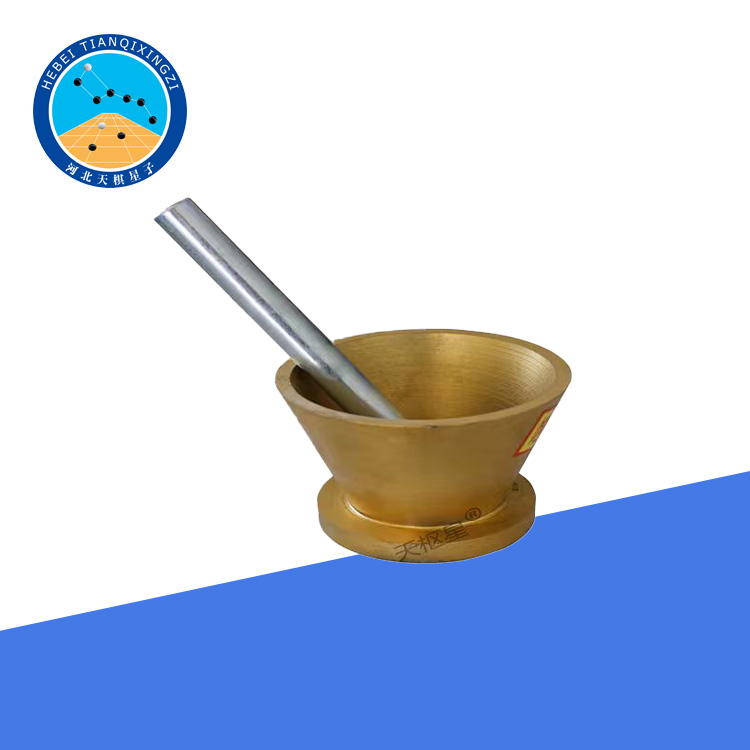
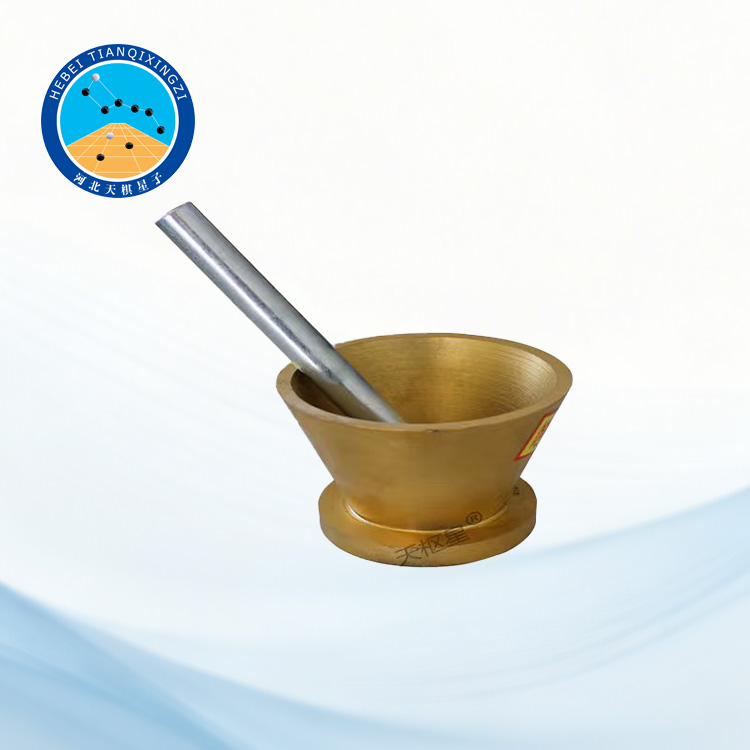
The SSD Cone Mold is used to determine whether fine aggregate has reached the saturated surface-dry (SSD) condition.During the test, the fine aggregate sample is filled into the cone mold and compacted with a tamping rod.
SSD Cone Mold | Sand Absorption Cone and Tamper
Model:TD330-M
I. Product Overview
The Saturated Surface-Dry (SSD) Cone Mold is manufactured by our company in accordance with JTG E42-2005 T0330-2005 “Test Method for Density and Water Absorption of Fine Aggregate”, with reference to ASTM C128.
This product is used to determine the bulk relative density, apparent relative density, saturated surface-dry (SSD) relative density, and water absorption of fine aggregates (including natural sand, manufactured sand, and stone dust) with a particle size of less than 2.36 mm at 23°C using the cone mold method.
When the material contains particles larger than 2.36 mm, such as 0–3.75 mm stone dust, it is recommended to sieve the sample using a 2.36 mm standard sieve. The portion retained on the 2.36 mm sieve shall be tested according to T0308 “Test Method for Density and Water Absorption of Coarse Aggregate.”
II. Technical Parameters
Dimensions of the Trial Mold:
Trial Mold Height: 73mm
Upper Inner Diameter: 40mm
Lower Inner Diameter: 90mm
III. Test Procedure
3.1 Immediately weigh approximately 300 g (m₃) of the saturated surface-dry (SSD) fine aggregate sample.
3.2 Quickly transfer the sample into a volumetric flask, taking care to prevent moisture evaporation and loss of aggregate particles. Add clean water to approximately the 450 mL mark, then rotate the volumetric flask to remove air bubbles. Carefully add water until the volume reaches the 500 mL mark. Insert the stopper securely, wipe off any water from the outside of the flask, and weigh the total mass (m₂).
3.3 Completely remove the aggregate sample from the flask, clean both the inside and outside of the flask, and fill it with the same water to the 500 mL mark. (The water temperature shall be measured each time; it is recommended to maintain the temperature at 23°C ± 1.7°C, and the temperature difference between the two measurements shall not exceed 2°C.) Insert the stopper securely, wipe off the external water, and weigh the total mass (m₁).
Place the removed aggregate sample in an oven at 105°C ± 5°C and dry it to a constant mass. After cooling to room temperature in a desiccator, weigh the mass of the dry sample (m₀).
IV. Instruments and Apparatus Used in Conjunction with This Product
(1) TD1001 Electronic Balance: Capacity: 1 kg; readability: ≤ 0.1 g.
(2) TD330-D Tamping Rod: Metal rod with a diameter of 25 mm ± 3 mm and a mass of 340 g ± 15 g (Figure T0330-1).
(3) Beaker: 500 mL.
(4) Volumetric Flask: 500 mL.
(5) TD101 Series Forced-Air Drying Oven: Capable of maintaining a temperature of 105°C ± 5°C.
(6) Clean Water: Temperature maintained at 23°C ± 1.7°C.
(7) Others: Desiccator, portable blower, shallow tray, aluminum scoop, glass rod, thermometer, etc.
V. Main Features
1. High-Quality Construction:
The SSD Cone Mold is manufactured from high-quality metal materials with excellent durability, corrosion resistance, and long service life.
2. Accurate Dimensions:
The cone mold is precisely manufactured according to standard requirements, ensuring reliable test results for fine aggregate SSD condition determination.
3. Easy Operation:
The simple structure allows quick and convenient operation, making it suitable for aggregate laboratories, construction material testing centers, and research institutions.
4. Complete Testing Set:
The product can be used together with a tamping rod and other laboratory equipment to complete fine aggregate specific gravity and water absorption tests.
5. Wide Application Range:
It is suitable for testing various fine aggregates, including natural sand, manufactured sand, and stone dust.
