


 Spanish
 Russian
 Arabic


Products Description
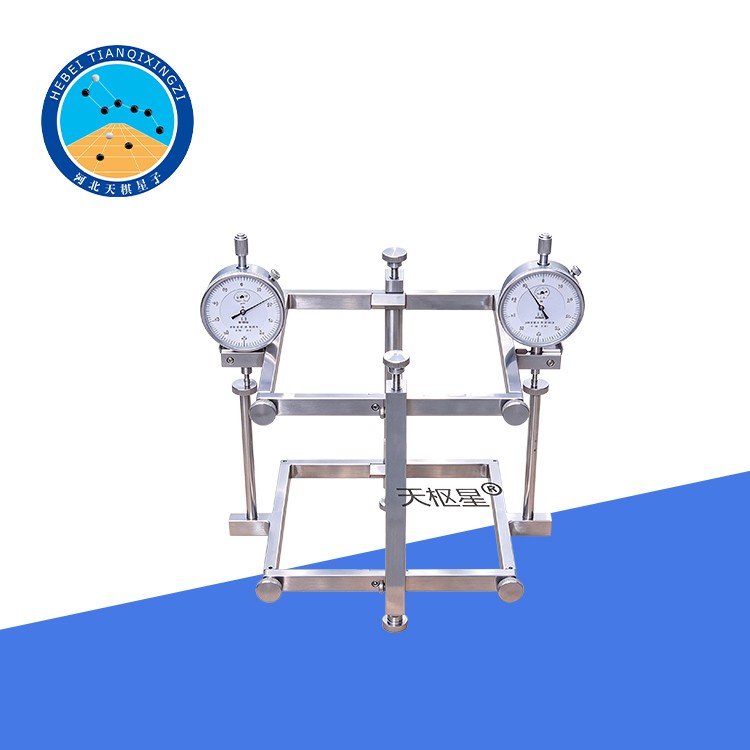
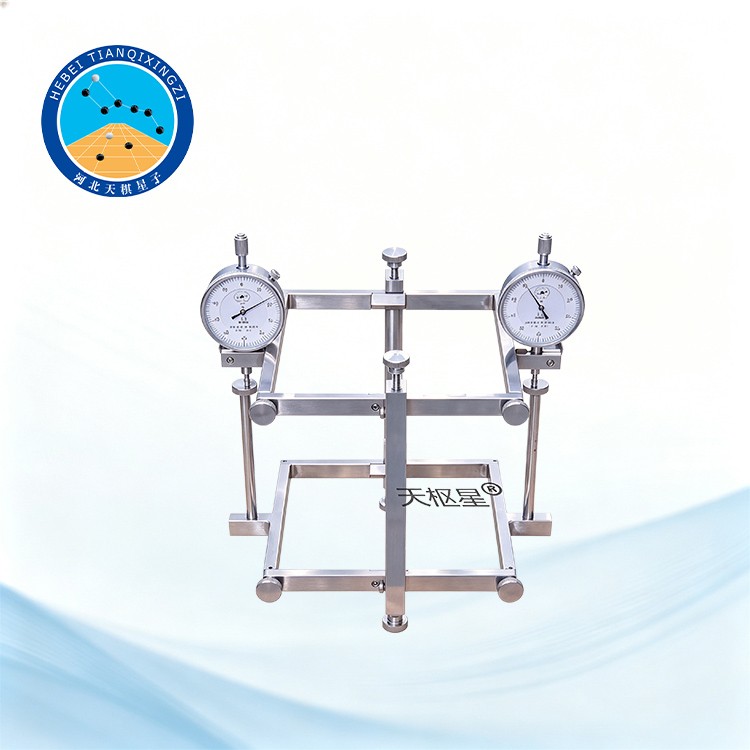
The Concrete Prism Elastic Modulus Tester is designed for determining the compressive elastic modulus of concrete specimens under axial compression. The equipment is suitable for laboratory testing of right-angled prismatic concrete specimens and can be used together with a concrete compression testing machine to measure the deformation of specimens under controlled loading.
Concrete Prism Elastic Modulus Tester
Model: TD556-A
I. Scope of Application
This test method specifies the procedure for determining the compressive elastic modulus of concrete, hereinafter referred to as the elastic modulus. The elastic modulus of concrete is determined based on the loading modulus at a stress level corresponding to 40% of the axial compressive strength. This test method is applicable to right-angled prismatic specimens of various types of concrete.
Reference Standards: ASTM C469/C469M, EN 12390-13, ISO 1920-10
II. Specimen Preparation
The specimen dimensions shall be the same as those specified for the axial compressive strength test.
Each group shall consist of six specimens of the same age, prepared and cured under the same conditions. Three specimens shall be used to determine the axial compressive strength, which is used to establish the loading criteria for the elastic modulus test, while the other three specimens shall be used for the elastic modulus test.
III. Instruments and Equipment
The main equipment shall comply with the requirements specified in this procedure.
Deformation Measuring Instruments: Two dial gauges (Grade 0 or Grade 1), or other measuring instruments with an accuracy of 0.001 mm or better.
VI. Working Principle
During the test, the concrete specimen is placed between the compression platens of a suitable compression testing machine, and the deformation measuring device is securely mounted on the specimen.
The specimen is subjected to controlled axial compressive loading. Two dial gauges are used to measure the longitudinal deformation of the specimen during loading. The deformation readings are recorded at the specified stress levels, and the compressive elastic modulus is calculated from the relationship between the applied stress and the corresponding deformation.
The test loading level is established based on the measured axial compressive strength of specimens from the same batch. The elastic modulus is determined using the loading modulus corresponding to a stress level of 40% of the axial compressive strength.
V. Test Procedure
1. Check the Concrete Prism Elastic Modulus Tester, compression testing machine, deformation measuring instruments, and other accessories to ensure that they are in good working condition.
2. Measure the dimensions of the concrete specimen and check its appearance for obvious defects.
3. Install the deformation measuring device on the specimen and ensure that the dial gauges are correctly positioned and securely fixed.
4. Place the specimen centrally between the compression platens of the testing machine.
5. Apply the load gradually according to the specified loading procedure and record the corresponding deformation readings.
6. Continue loading until the specified stress level is reached, and record the deformation at the required loading points.
7. Remove the specimen after completion of the test and check the equipment and measuring instruments.
8. Calculate the compressive elastic modulus based on the measured stress and deformation data.
VI. Key Features
1. Designed for compressive elastic modulus testing of concrete specimens.
2. Suitable for right-angled prismatic concrete specimens.
3. Equipped with two precision dial gauges for deformation measurement.
4. Supports deformation measurement with an accuracy of 0.001 mm or better when suitable measuring instruments are used.
5. Simple mechanical structure and convenient operation.
6. Can be used together with a concrete compression testing machine.
7. Suitable for routine laboratory testing, quality control, and concrete research.
8. Provides reliable deformation data for calculating the elastic modulus of concrete.
