


 Spanish
 Russian
 Arabic


Products Description
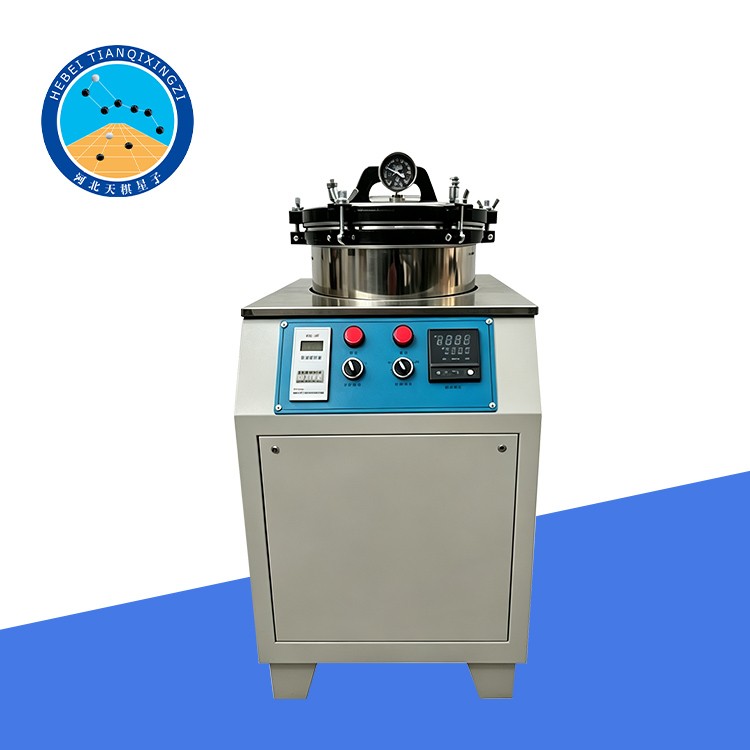
The Cement Mortar Rapid Strength Testing Machine is designed to rapidly determine the early strength of cement mortar through 1.5-hour accelerated setting and autoclave curing. When an empirical formula with the required accuracy for strength estimation has already been established, the equipment can be used to rapidly estimate the 28-day compressive and flexural strength of cement mortar.
Cement Mortar Rapid Strength Testing Machine
Model: TD512-1
I. Product Description
The Cement Mortar Rapid Strength Testing Machine is developed and manufactured by Hebei Tianqixingzi Inspection Equipment Co., Ltd. in accordance with JTG E30-2005, Test Methods of Cement and Cement Concrete for Highway Engineering, specifically T0512-2005, Rapid Strength Test Method for Cement Mortar (1.5 h Accelerated Setting and Autoclave Method).
This method is applicable to the testing of the flexural and compressive strength of Portland cement, ordinary Portland cement, blast-furnace slag Portland cement, fly ash Portland cement, composite Portland cement, road Portland cement, and limestone Portland cement.This method cannot be used to determine the strength grade of cement.
II. Referenced Standards
GB/T 6003.3-1997 — Test Sieves
GB/T 17671-1999 — Method of Testing Cements — Determination of Strength (ISO Method)
JC/T 681-1997 — Planetary Cement Mortar Mixer
Cement Mortar Specimen Molding and Vibrating Table
40 mm × 40 mm Cement Compression Testing Fixture
Cement Physical Testing Equipment — Mortar Vibrating Table
Cement Physical Testing Equipment — Electric Flexural Testing Machine
Cement Mortar Test Mold
Method of Testing Cements — Determination of Strength (ISO Method)
III. Equipment
(1) TDYE-300 Series Compression Testing Machine
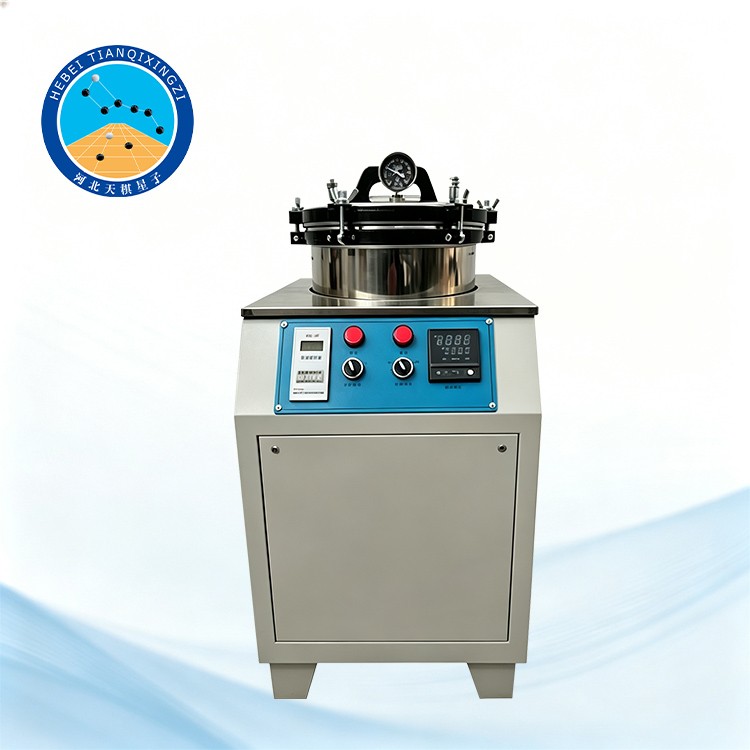
(2) TD512-1 Cement Mortar Rapid Strength Tester
Technical Specifications
Power Supply: AC 220 V ± 22 V, 50 Hz ± 1 Hz
Power Consumption: 2 kVA ± 10%
Rated Working Pressure: ≤ 0.14 MPa
Chamber Dimensions: Φ80 mm × 280 mm
Corresponding Temperature: Approximately 126–128°C
Time from closing the lid and pressurizing the valve to reaching the working steam pressure: 20–30 min
(3) Platform Scale: Capacity: 5 kg; scale interval: 5 g.
(4) Balance: Capacity: ≥100 g; scale interval: ≤0.1 g.
(5) TD512-MG Mold Cover Plate: Made of steel, with dimensions of 200 mm × 150 mm × 10 mm. The lower surface is smooth and flat.
(6) Stopwatch: Resolution: 1 s.
(7) 0.9 mm Square-Hole Test Sieve
(8) TD506-A/B/C Cement Mortar Mixer
(9) TD506-Z1/Z2 Cement Mortar Vibrating Table
(10) TD506-M Standard Cement Mortar Test Mold
(11) TD506-ML Material Feeding Funnel
(12) Scraping Knife
(13) TD506-KY Standard Compression Testing Fixture
IV. Materials and Reagents
(1) Cement: The cement sample shall be thoroughly mixed, passed through a 0.9 mm square-hole test sieve, and the residue retained on the sieve shall be recorded.
(2) Sand: ISO Standard Sand shall be used and shall comply with the quality requirements specified in GB/T 17671-1999.
(3) Water: Clean fresh water shall be used.
V. Test Procedure
1. Preparation of Cement Mortar Specimens
Prepare the cement mortar in accordance with the requirements of GB/T 17671-1999. The cement, ISO Standard Sand, and water shall be accurately weighed and mixed according to the specified proportions and procedures.
2. Specimen Molding
After mixing, place the fresh cement mortar into the standard test mold and compact it using the specified vibrating table. Level the surface of the specimens with a scraping knife and prepare the specimens for subsequent accelerated curing.
3. Accelerated Setting and Autoclave Curing
Place the molded specimens into the TD512-1 Cement Mortar Rapid Strength Tester and close the cover. After the chamber is sealed and pressurized, gradually increase the steam pressure to the specified working pressure.
The accelerated setting and autoclave curing process lasts approximately 1.5 hours. The corresponding working temperature is approximately 126–128°C, with a rated working pressure of ≤0.14 MPa.
4. Strength Testing
After completion of the accelerated curing process, remove the specimens and carry out the flexural and compressive strength tests using the corresponding testing equipment and fixtures.
The test results can be used, together with an established empirical relationship, to rapidly estimate the 28-day flexural and compressive strength of cement mortar.
VI. Test Result and Evaluation
The flexural and compressive strength shall be calculated in accordance with the applicable requirements of GB/T 17671-1999.
The rapid test results shall be correlated with the corresponding 28-day strength values through a previously established empirical formula. The reliability of the estimated 28-day strength depends on the accuracy and applicability of the empirical relationship established for the cement being tested.
Note: The rapid test method is intended for rapid strength estimation and shall not be used to determine the strength grade of cement.
