


 Spanish
 Russian
 Arabic

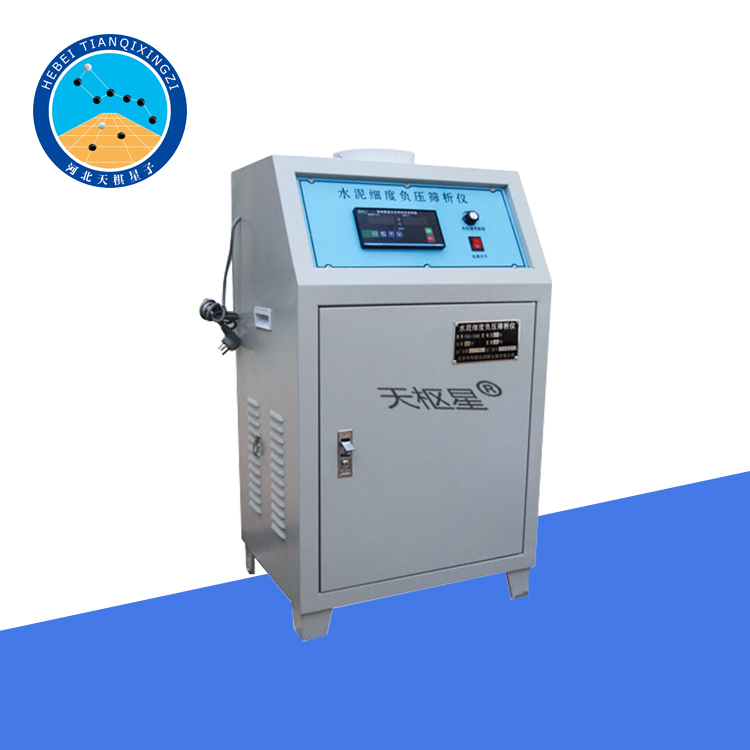

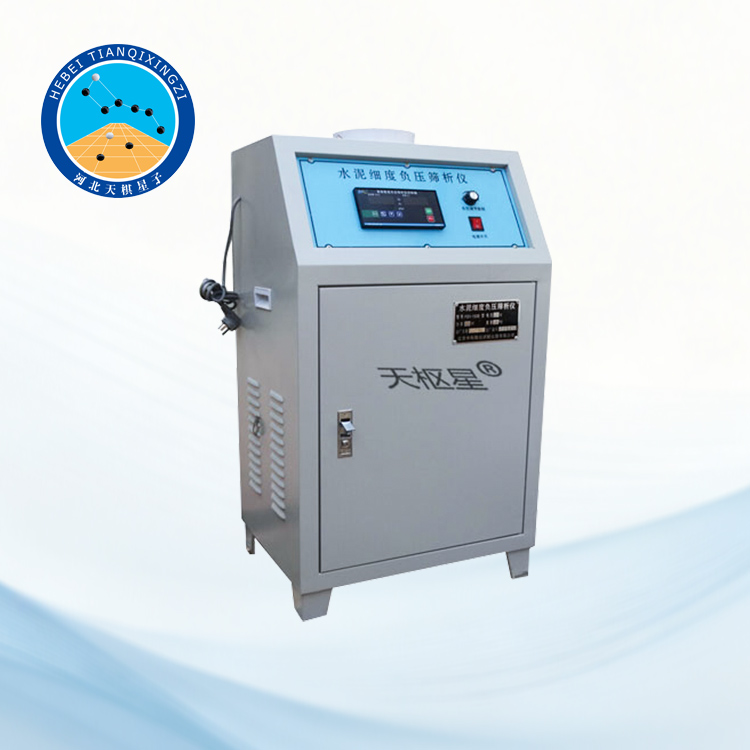
Products Description
The Cement Fineness Tester is designed to determine cement fineness by negative-pressure sieve analysis. It is suitable for testing Portland cement, ordinary cement, slag cement, pozzolanic cement, and fly ash cement. With simple operation and reliable performance, it is widely used in cement plants, construction laboratories, universities, and quality control facilities.
Cement Fineness Tester | Negative Pressure Sieve Method
Model: TD502-1
I. Product Overview
The Cement Fineness Tester is designed to determine the fineness of various types of cement, including Portland cement, ordinary cement, slag cement, pozzolanic cement, and fly ash cement using the negative pressure sieving method. With a simple structure and easy operation, it is widely used in cement plants, construction companies, universities, and laboratories.
Reference standards: ASTM C430, ASTM C1891, EN 196-6
II. Technical Specifications
1. Test Sieve Apertures: 0.08 mm and 0.045 mm
2. Working Negative Pressure: −4,000 to −6,000 Pa
3. Nozzle Rotation Speed: 30 ± 2 rpm
4. Nozzle-to-Sieve Distance: 2–8 mm
5. Cement Sample Mass: 25 g
6. Power Supply: 220 V
7. Power Consumption: 800 W
III. Operating Procedure
1. The Cement Fineness Tester is packaged in a protective carton and plastic wrapping. After unpacking, check that all accompanying documents, including the certificate of conformity, packing list, and operating manual, are complete. Read the operating manual carefully before use.
2. Place the Cement Fineness Tester on a flat and level surface. Open the rear access panel and check that all components and connections are properly installed. Make sure all connecting tubes and ports are securely sealed to prevent air leakage. Then connect the power plug to a 220 V AC power outlet with reliable protective grounding. The instrument is then ready for operation.
3. Set the timer to the required test duration and switch on the power. The instrument will operate automatically and stop when the preset time has elapsed. If the working negative pressure falls outside the range of −4,000 to −6,000 Pa, turn the pressure adjustment knob to bring the negative pressure within the specified range.
4. When performing the sieve analysis in accordance with GB 1345-91, weigh 25 g of cement sample using a balance and place it into the test sieve. Fit the sieve lid securely and start the instrument. After the instrument stops automatically, remove the test sieve and transfer the retained material to a balance for weighing. The sieve residue can then be calculated and reported as the test result.
IV. Maintenance
1. After each use, gently brush both sides of the test sieve with a soft brush to remove any residual cement. Hold the sieve up to natural or artificial light to check that the mesh is clean and unobstructed. Store the test sieve in a dry container or sealed plastic bag.
2. If the test sieve becomes clogged, place it upside down on the sieve holder, fit the sieve lid, and run the instrument to perform reverse suction. Then gently brush the mesh clean. If necessary, disconnect the vacuum hose from the cyclone chamber and use the suction tube directly on the sieve mesh while brushing it gently. For severe clogging, soak the test sieve in water for an appropriate period before carefully cleaning and brushing the mesh.
3. After use, switch off the power and wipe the external surfaces of the instrument with a clean cloth.
4. When the cement powder collected in the dust collection bottle is nearly full, remove the bottle from the cyclone chamber by rotating it clockwise, empty the collected powder, and then reinstall it by rotating it counterclockwise.
5. The vacuum cleaner should be cleaned regularly to keep the dust collection bag free of accumulated cement powder and ensure that the negative pressure remains within the range required by the applicable standard. Before removing the vacuum cleaner, first unplug its power cord from the socket inside the instrument cabinet. Then pull the front locking lever downward to release the vacuum cleaner from its base, allowing it to be removed for cleaning.
6. If the Cement Fineness Tester is operated continuously for an extended period, stop the instrument periodically to allow the vacuum motor to cool. This helps prevent overheating and extend the service life of the vacuum motor.
