


 Spanish
 Russian
 Arabic

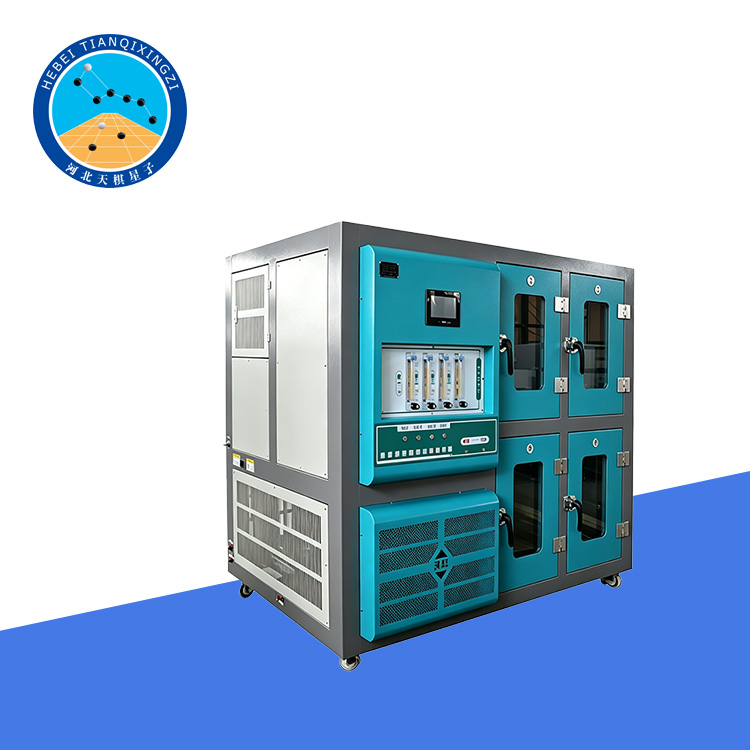

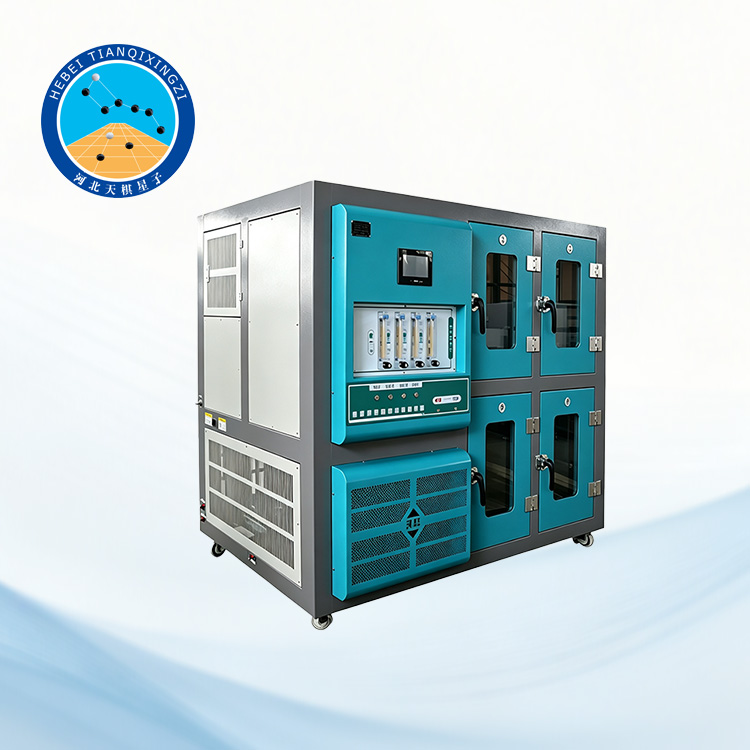
Products Description
Small-Scale Formaldehyde Emission Chamber is designed for measuring formaldehyde emissions from wood products, furniture, flooring, carpets, and other building materials. It provides precise control of temperature, humidity, air exchange rate, and airflow conditions to create a stable testing environment. The chamber ensures accurate and reliable evaluation of formaldehyde release performance, making it suitable for laboratories, quality inspection centers, and material research applications.
Small-Scale Formaldehyde Emission Chamber
Model:TDLY32379-4
I. Overview
This Small-Scale Formaldehyde Emission Chamber is designed for determining free formaldehyde emissions from consumer products such as wood products, furniture, flooring, carpets, footwear, and building and decorative materials.
A test specimen with a known surface area is placed inside the chamber, where the temperature, relative humidity, air velocity, and air exchange rate are maintained at specified values. Formaldehyde emitted from the specimen is released into the chamber air and mixes uniformly with the circulating air. At predetermined intervals, air samples are drawn from the chamber and passed through a gas-washing bottle containing distilled water, where the formaldehyde is absorbed. The absorbed formaldehyde concentration in the water is then analyzed to determine the formaldehyde emission level of the test specimen.
II. Reference Standards for Environmental Chamber Design
The environmental chamber is designed in accordance with the requirements of the following international and national standards:
ASTM E1333 – Standard Test Method for Determining Formaldehyde Concentrations in Air and Emission Rates from Wood Products Using a Large Chamber
ASTM D6007 – Standard Test Method for Determining Formaldehyde Concentrations in Air from Wood Products Using a Small-Scale Chamber
EN 717-1 – Wood-Based Panels — Determination of Formaldehyde Release — Part 1: Formaldehyde Emission by the Chamber Method
GB/T 17657-2013 – Test Methods of Evaluating the Properties of Wood-Based Panels and Surface Decorated Wood-Based Panels
GB 18584-2001 – Indoor Decorating and Refurbishing Materials — Limit of Harmful Substances of Wood Furniture
GB 18587-2001 – Indoor Decorating and Refurbishing Materials — Limit of Harmful Substances Released from Carpets, Carpet Cushions and Carpet Adhesives
LY/T 1980-2011 – 1 m³ Climate Chamber for Formaldehyde Emission Testing
GB 18580-2017 – Indoor Decorating and Refurbishing Materials — Limit of Formaldehyde Emission of Wood-Based Panels and Finishing Products
ISO 12460-1:2007 – Wood-Based Panels — Determination of Formaldehyde Release — Part 1: Formaldehyde Emission by the Chamber Method
LY/T 1612-2004 – 1 m³ Climate Chamber for Formaldehyde Emission Testing
III. Performance Characteristics
Advanced Heat Exchanger Technology: High heat exchange efficiency, small temperature gradient;
Cooling and Cooling Counterbalanced Temperature-Regulating Water Tank: Stable temperature control;
Imported Humidity and Temperature Sensors: High sensor accuracy and stable performance;
High-Quality Refrigeration Unit: Imported refrigeration unit, stable operation and long service life;
Protection devices: Both the climate chamber and dew point tank are equipped with high and low temperature alarms and high and low water level alarms;
Protection measures: The compressor also has overheat, overcurrent, and overpressure protection measures, ensuring safe and reliable operation of the entire unit;
Stainless Steel Inner Chamber: The inner chamber is constructed from high-quality stainless steel with a smooth, non-condensing surface that does not adsorb formaldehyde, ensuring accurate and reliable test results.
Excellent Thermal Insulation and Air Circulation: The chamber is insulated with high-density rigid polyurethane foam, while the door is sealed with a silicone rubber gasket to provide excellent thermal insulation and airtightness. A forced air circulation system is installed inside the chamber to maintain uniform temperature and humidity throughout the test space.
IV. Technical Parameters
1. Optimal Operating Temperature: 15℃~25℃; Operating Humidity: ≤90%RH
2. Adjustable Temperature Range: 10℃~40℃; Temperature Control Accuracy: ±0.1℃; Fluctuation Rate: ≤±0.5℃; Uniformity: ≤±0.5℃
3. Adjustable Humidity Range: 30%~80%; Humidity Control Accuracy: ±2%RH; Fluctuation Rate: ≤±3%RH; Uniformity: ≤±5%RH
4. Air exchange rate: once per hour
5. Air velocity: 0.1m/s~0.3m/s (continuously adjustable), accuracy ≤0.05m/s
6. Inner casing material: 304 mirror stainless steel plate, seamless welding, polished at the welds and surrounding areas, no deformation, smooth inner wall, uniform color, no exposed base, delamination, blistering, or scratches.
7. Outer Chamber Construction: The outer chamber is fabricated from A3 color-coated steel panels with an electrostatic powder-coated finish. The coating is smooth, uniform in color, and free from defects such as exposed substrate, peeling, blistering, stains, or deep scratches.
The chamber body and door provide excellent thermal insulation through a double-layer sandwich insulation structure consisting of polyurethane foam and mineral wool. The insulation layer is not less than 50 mm thick, with a thermal conductivity not exceeding 0.01 W/(m·K). All joints between the inner wall panels are seamlessly welded to ensure airtightness, durability, and long-term structural integrity.
8. Air Exchange System: The chamber is equipped with a continuously adjustable air exchange system (including a dry air flow meter) to precisely control the air exchange rate. The air inlet and outlet are located on different inner walls and at different heights to ensure proper airflow distribution and compliance with the requirements of the applicable testing standards.
10. Air Circulation (Mixing) System: A circulation fan is installed inside the chamber to promote uniform air mixing. The air velocity near the surface of the test specimen is maintained between 0.1 m/s and 0.3 m/s, in accordance with relevant testing standards.
11. Power Supply: 220 V, 50 Hz.
V. Operating Instructions
1. Connect the exhaust port to the outside using a flexible hose;
2. Block the gas sampling port;
3. Check that the water levels in each tank are normal;
4. Connect the device to a power source;
5. The instrument will display the following interface.
