


 Spanish
 Russian
 Arabic

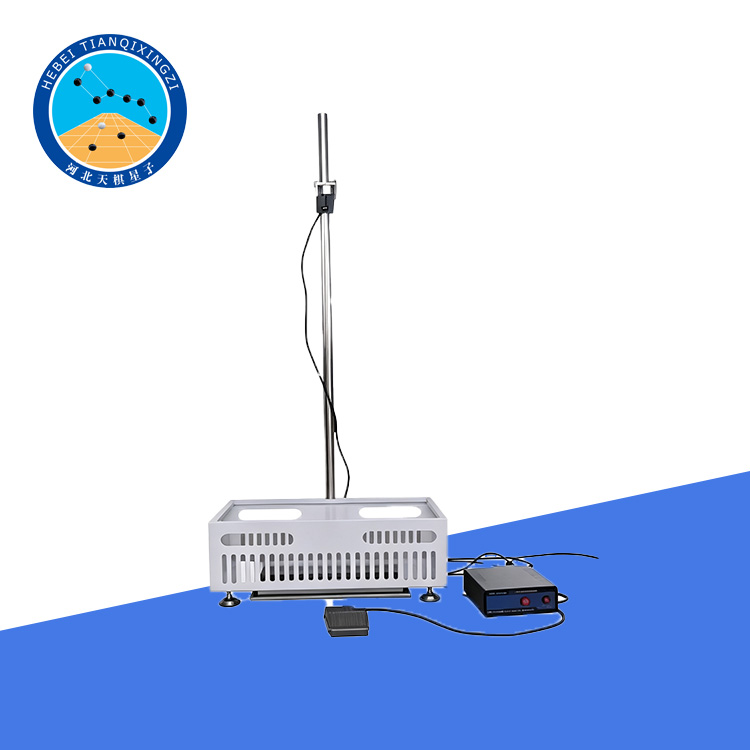

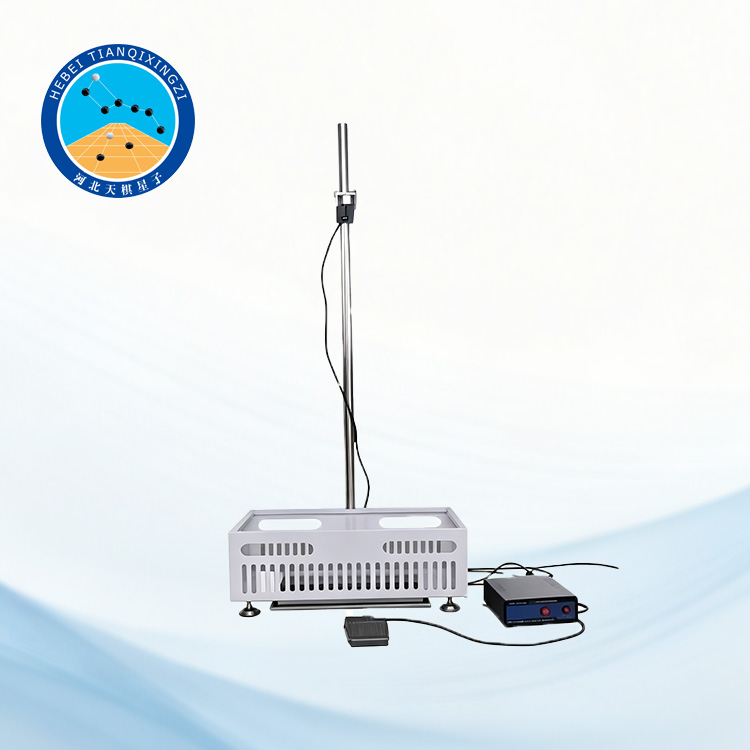
Products Description
The Wood-Based Panel Ball Impact Resistance Tester is designed to accurately evaluate the impact resistance of various types of wood-based panels and decorative panels. With reliable performance and easy operation, it is an ideal testing instrument for quality inspection departments, research institutions, and wood-based panel manufacturers for product quality control and performance evaluation.
Wood-Based Panel Ball Impact Resistance Tester
Model:TDSB-QC2
I. Product Introduction
The Wood-Based Panel Ball Impact Resistance Tester is specially developed for evaluating the impact resistance performance of wood-based panels and surface-decorated wood-based panels. It complies with the requirements of GB/T 17657 “Test Methods of Evaluating the Properties of Wood-Based Panels and Surface Decorated Wood-Based Panels” and refers to ISO 24335 for ball drop impact testing.
II. Technical Parameters
1. Maximum Test Force: 5J
2. Maximum Test Space: 1750mm
3. Steel Ball Diameter (mm): Ø42.8±0.2
4. Steel Ball Mass (g): 324±5
5. Specimen Size (mm): 230×230
6. Overall Dimensions (Width*Length*Height) (mm): 380×480×1900
III. Usage Method
1. Preparation of Test Specimens According to Test Requirements
Specimen dimensions:
Length l = (230 ± 5) mm and width b = (230 ± 5) mm;
or length l = (180 ± 5) mm and width b = (180 ± 5) mm.
(If the panel width is less than 180 mm, the actual panel width shall be used.)
2. Test Method
2.1 For thin thermosetting resin-impregnated paper high-pressure decorative laminates (HPL), the HPL sheet shall first be bonded to a particleboard substrate using the specified adhesive to prepare the test specimen.
For HPL sheets with a thickness of 2.0 mm ≤ t < 5.0 mm, the specimen may be clamped together with the particleboard using a specimen holder.
For HPL sheets with a thickness of t ≤ 5.0 mm, no particleboard support is required.
2.2 Place the test specimen in an environment with a temperature of (23 ± 2)℃ and a relative humidity of (50 ± 5)% for at least 7 days before testing.
2.3 For HPL sheets, clamp the specimen with the decorative surface facing upward in the frame fixture, and place it on the base of the testing machine.
For impregnated paper laminated flooring and other similar products, place the underlay on a smooth and level surface. Then place the test specimen on the underlay with the decorative surface facing upward.
2.4 Cover the surface of the test specimen with a sheet of carbon paper, ensuring close contact with the specimen surface. Allow the steel ball to fall freely and vertically onto the specimen surface from a specified height (the height shall be defined according to the product standard).
When the ball rebounds for the first time, catch it immediately to prevent repeated impacts. The number of impacts shall be specified by the relevant product standard. The distance between impact points and the distance between each impact point and the edge of the specimen shall be greater than 50 mm.
For arbitration testing, each specimen shall be subjected to only one impact, and the impact point shall be located as close as possible to the center of the specimen.
2.5 Measure the indentation diameter, accurate to 0.1 mm.
