


 Spanish
 Russian
 Arabic

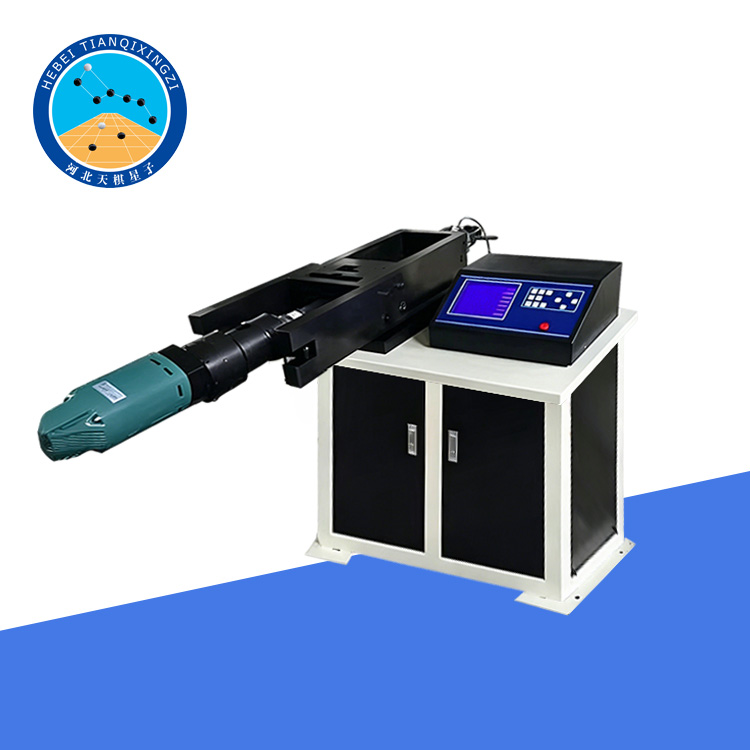

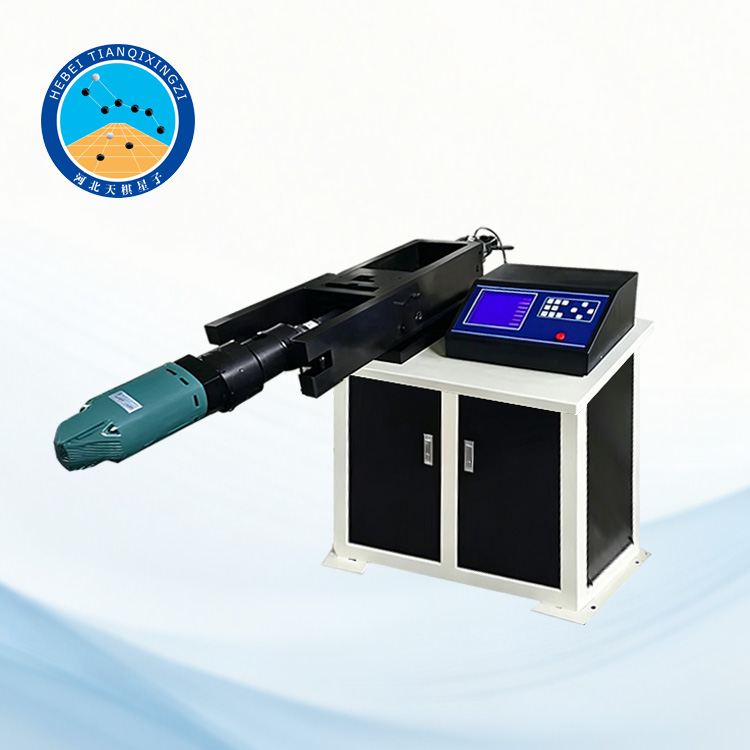
Products Description
The high-strength bolt testing machine is equipped with parameter backup and recovery functions, automatic calibration, peak value holding monitoring, and sensor overload protection for enhanced safety. It is also fitted with an RS232 communication interface, enabling connection to a computer for data transfer, analysis, and report generation (optional software required).It is widely used in steel structure manufacturing enterprises, fastener manufacturers, third-party testing laboratories, as well as research institutes and universities.
Semi-Automatic High-Strength Bolt Testing Machine
Model:TDLS-500B
I. Product Introduction
The Semi-Automatic High-Strength Bolt Testing Machine is designed and manufactured in accordance with the requirements of GB 50205 “Code for Acceptance of Construction Quality of Steel Structures”, and it also complies with international reference standards such as ISO 16047 and EN 14399-2 for torque/clamp force testing methods.
This equipment is used for testing the axial force, tightening torque, and torque coefficient of large hexagon high-strength bolt assemblies (M16, M20, M22, M24, M27, M30). It features automatic data display, automatic calculation, and automatic printing of test reports.
II. Technical Specifications
Power Supply: AC 220V
Axial Force Range: 20–500 kN
Torque Range: 10–2000 N·m
Bolt Sizes: M16, M20, M22, M24, M27, M30
Bolt Length: 60–280 mm
Axial Force Accuracy: ±1.0%
Torque Accuracy: ±1.0%
Data Storage: 32 Test Groups
Communication: RS232 Interface
Statistical Functions: Average, Standard Deviation, CV
Display: Digital LCD Display
III. Features and Benefits
1. High-Precision Measurement
The machine accurately measures:
Axial Force
Tightening Torque
Torque Coefficient
Measurement accuracy reaches ±1.0% for both axial force and torque.
2. Horizontal Ergonomic Design
The horizontal machine structure provides:
Safe operation
Easy specimen installation
Comfortable working position
Improved testing efficiency
3. Linear Guide Testing Module
The torque and tension testing module is mounted on precision linear guide rails, allowing quick specimen positioning while reducing installation errors.
4. One-Button Automatic Testing
The user-friendly control software enables one-click operation. After the specimen is installed, the testing procedure is completed automatically.
5. Stable Speed Loading System
A geared motor provides constant-speed loading, significantly improving:
Test repeatability
Measurement consistency
Data reliability
6. Intelligent Statistical Analysis
After completing one batch of tests, the system automatically calculates:
Average Axial Force
Average Torque
Average Torque Coefficient
Standard Deviation
Coefficient of Variation (CV)
No manual calculation is required.
7. Data Storage and Printing
The controller can continuously store 32 groups of test records.
Functions include:
Data review
Report printing
Automatic calculation
Parameter backup and recovery
IV. Applications
This equipment is suitable for the following industries and organizations:
Steel structure manufacturing enterprises
High-strength bolt manufacturers
Engineering quality inspection centers
Third-party testing laboratories
Construction and engineering companies
Wind power tower manufacturing industry
Bridge and railway engineering projects
Universities and research institutes
V. FAQ
1. What types of bolts can be tested?
The machine is designed for large hexagon high-strength structural bolt assemblies with sizes from M16 to M30.
2. What testing parameters can the machine measure?
It measures:
Axial Force
Tightening Torque
Torque Coefficient
The system also automatically calculates average values, standard deviation, and coefficient of variation.
3. Is the testing process fully automatic?
The machine is semi-automatic. Operators manually install the specimen, while the testing process, data acquisition, calculation, and result display are completed automatically.
4. Can the testing data be transferred to a computer?
Yes. The machine is equipped with an RS232 communication interface, allowing test data to be transferred to a computer for report generation and further analysis. Optional software is available upon request.
5. Which industries commonly use this machine?
The machine is widely used in:
Steel structure manufacturing
Construction quality inspection
Bolt manufacturing
Wind power projects
Bridge construction
Universities
Research institutes
Third-party testing laboratories
