


 Spanish
 Russian
 Arabic


Products Description
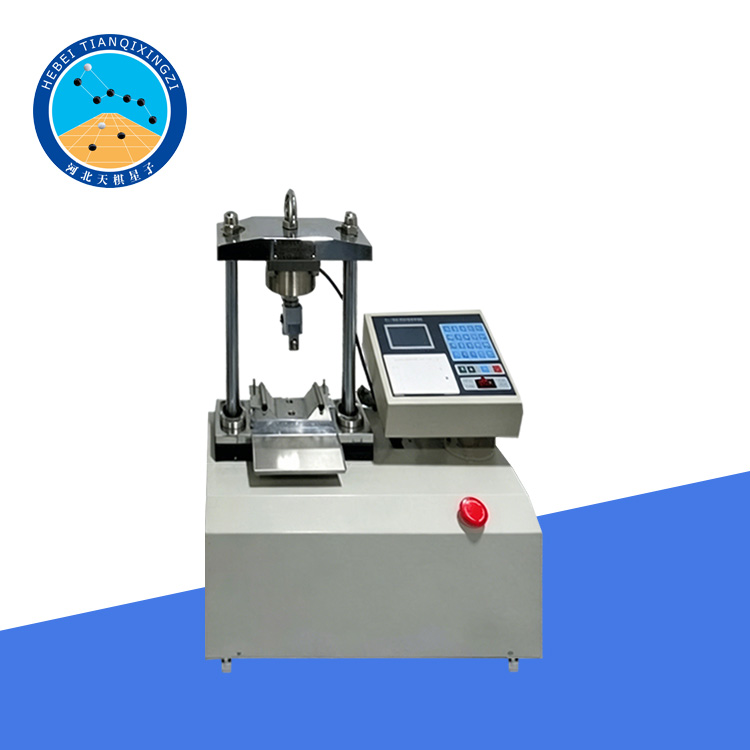
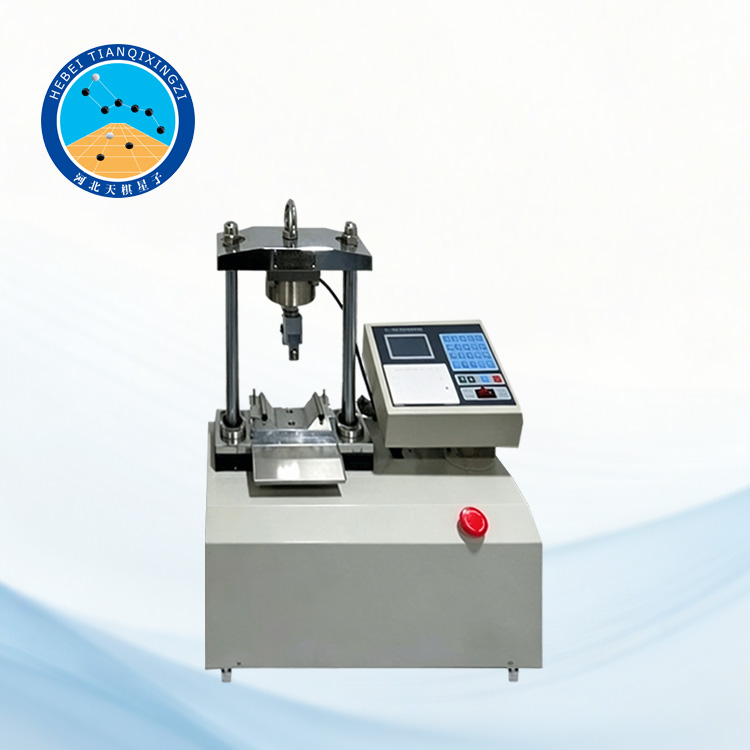
It is mainly used for testing the flexural strength of 40×40×160 mm cement mortar prism specimens. The machine is a new-generation automatic constant-load testing system developed by our company, integrating high-precision measurement, microprocessor control, data acquisition, and intelligent testing functions.Compared with traditional flexural testing machines, this equipment offers higher accuracy, compact structure, easier operation, faster testing speed, and optional PC control and networking capability.
Microcomputer-Controlled Cement Flexural Testing Machine
Model:TDYE-10
I. Product Overview
The 10kN Microcomputer-Controlled Cement Flexural Testing Machine (TDYE-10) is designed and manufactured in accordance with GB 177-85 “Test Method for Cement Mortar Strength”, GB/T 17671-1999 (ISO Method), and T0503-94 of the Highway Engineering Cement Concrete Test Procedures.It is widely used in cement plants, construction engineering companies, quality inspection stations, universities, and research institutes.
II. Main Features
Automatic constant load control system
High-precision signal conditioning system and 32-bit ARM microprocessor
Real-time force measurement and data processing
Supports data storage, printing, networking, and remote transmission
Supports computer-based control operation
Compact structure and stable performance
Easy operation and high degree of automation
High testing accuracy and good repeatability
Suitable for laboratory and industrial testing environments
III. Application Scope
Cement mortar flexural strength test (40×40×160 mm prism)
Cement quality testing
Building materials laboratory testing
Engineering quality supervision department testing
Testing by universities and research institutions
IV. Technical Specifications
Power Supply: AC 220V ±10%, 50Hz
Power Consumption: ≤15 W
Maximum Test Force: 10 kN (10,000 N)
Loading Speed: 50 N/s ± 5 N/s
Indication Error: ≤ ±1%
Repeatability Error: ≤ 1%
Printer Paper Size: 57 mm thermal paper
Fuse Specification: 1 A
V. Control System
The equipment adopts an advanced microcomputer control system with the following functions:
Automatic loading and test control
Real-time display of test force and status
Data acquisition and processing
Automatic calculation of test results
Data storage and retrieval
Optional computer control software system
Report printing and data export functions
