


 Spanish
 Russian
 Arabic


Products Description
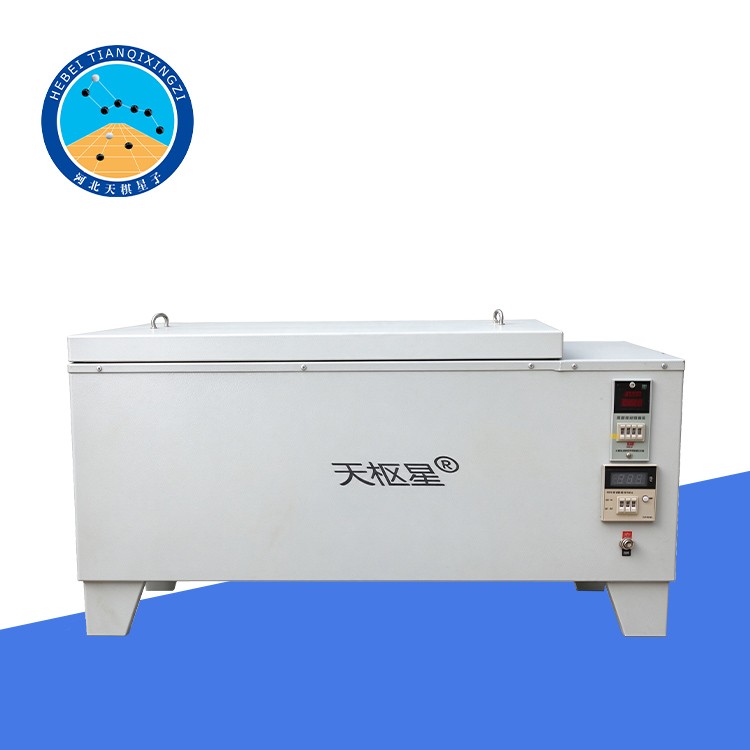
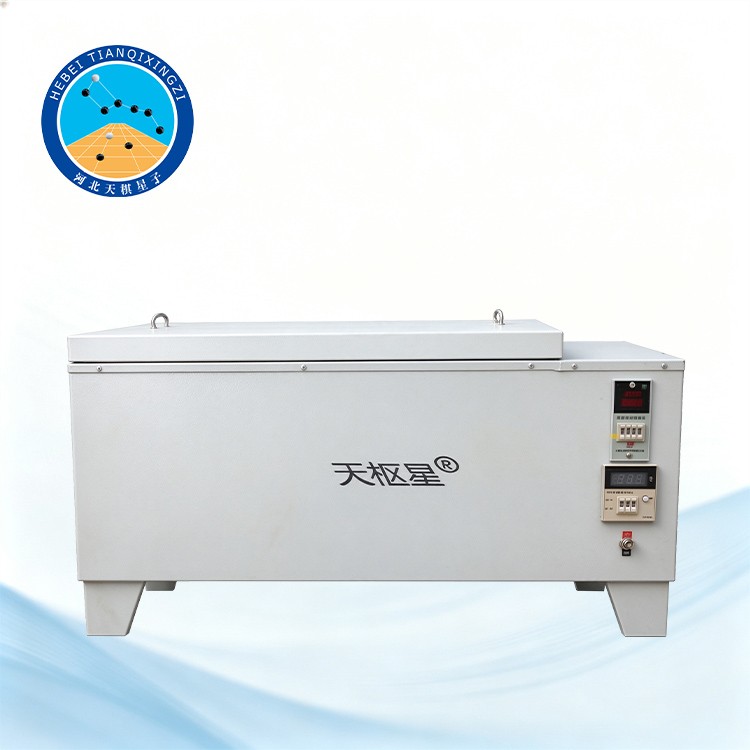
The Concrete Specimen Accelerated Curing Chamber accelerates the early-age strength development of cement mortar specimens by providing controlled elevated-temperature curing conditions. By maintaining a specified curing temperature for a predetermined period, the equipment helps evaluate the relationship between early-age strength and later-age strength under standard curing conditions.
Concrete Specimen Accelerated Curing Chamber
Model: TDJT236-12.2
I. Product Introduction
The Cement Accelerated Curing Chamber is suitable for the accelerated curing of cement mortar specimens made from ordinary Portland cement, slag cement, pozzolanic cement, and fly ash cement. It is widely used in cement plants, construction companies, and research institutions.
The equipment complies with relevant industry standards, including T0509-94, Rapid Test Method for the Strength of Cement Mortar. With accelerated curing, the compressive and flexural strength results at 3, 7, and 28 days can be predicted within 24 hours, with the target curing age selected according to specific requirements. This helps shorten the cement testing cycle and accelerate cement production, quality inspection, and delivery.
Reference Standards: ASTM C1768/C1768M-25, ASTM C918/C918M-20, EN 196-1:2016
II. Technical Specifications
1. Temperature control range: Ambient temperature to 100°C
2. Timer range: 0.5–24 hours
3. U-shaped heating element: 1000W/220V
4. Water heating time: 2 hours to reach 100°C
Note: The stainless steel chamber accommodates three sets of cement test molds.
III. Operating Instructions
1. Place the chamber on a stable, level surface. First, check the electrical components for any damage and ensure that all wiring connections are secure. Connect the temperature sensor and heater plugs properly. The equipment must be reliably grounded.
2. Open the chamber and add water to a depth of approximately 60 mm. After molding, allow the specimens to stand at room temperature for 7 hours or under standard curing conditions for 3 hours. When the cement is approaching its final setting time, place the specimens together with their molds on the racks inside the chamber. The observation time should be adjusted according to the cement composition and its setting characteristics.
3. Close the chamber lid securely and connect the temperature sensor. Set the curing temperature and operating time according to the composition and characteristics of the cement produced by the relevant manufacturer.
4. After the test is completed, remove the molds and leave them at room temperature. Once the specimens have returned to room temperature, remove the molds and take out the specimens for flexural and compressive strength tests.
5. After the test is completed, drain the water and wipe the inside of the chamber dry.
6. Depending on the type of cement, the curing temperature may be maintained between 65°C and 80°C. Conduct 10–20 comparative tests between the standard curing method and the accelerated curing method to determine the corresponding ratio or difference and establish the standard test results.
IV. Common Faults and Troubleshooting
1. The controller does not display or function properly:
a. The power supply is disconnected. Check the fuse and power plug.
b. The power switch is faulty. Replace it with a new one.
c. The controller's input or output wires have become disconnected, or the plug is not securely inserted. Check the wiring connections and ensure the plug is properly connected.
d. The contactor is burnt out. Replace it with a contactor of the same model.
2. The unit does not cool:
a. Check whether the temperature controller's setpoint is correct and whether it is providing an output signal. Adjust the setpoint as necessary or check the temperature controller's fuse.
V. Applications
The Concrete Specimen Accelerated Curing Chamber is designed for cement mortar strength testing and accelerated evaluation in construction materials laboratories. Typical applications include:
Cement Manufacturing Plants: Supports rapid strength evaluation during cement production and quality control.
Construction Materials Testing Laboratories: Helps shorten the testing cycle for cement mortar specimens.
Quality Inspection Institutions: Supports comparative testing and assessment of cement strength development.
Research Institutions and Universities: Facilitates studies on cement hydration, curing conditions, and early-age mechanical properties.
Construction Companies: Provides additional testing data to support cement quality assessment and material selection.
VI. Importance of Accelerated Cement Strength Testing
Cement strength testing is essential for evaluating material quality and ensuring consistency in construction projects. Conventional strength tests require specimens to be cured for specified periods before testing, which can delay quality-control decisions.
The accelerated curing chamber provides an alternative approach by using elevated-temperature curing to obtain early strength data more quickly. When calibrated against standard curing results for a particular cement type, the equipment can help laboratories establish a correlation between accelerated strength and standard-age strength. This supports more efficient production control, product evaluation, and laboratory testing.
