


 Spanish
 Russian
 Arabic


Products Description
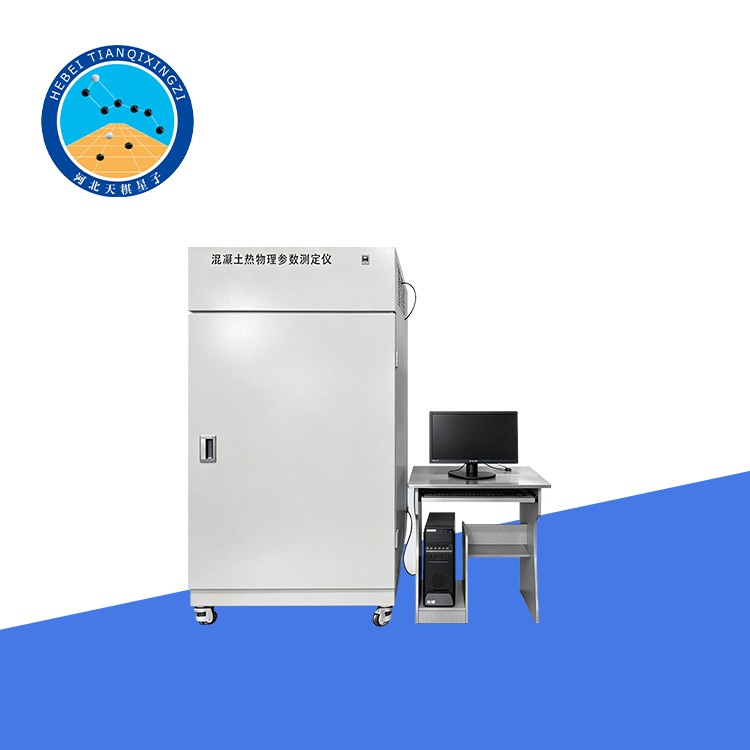
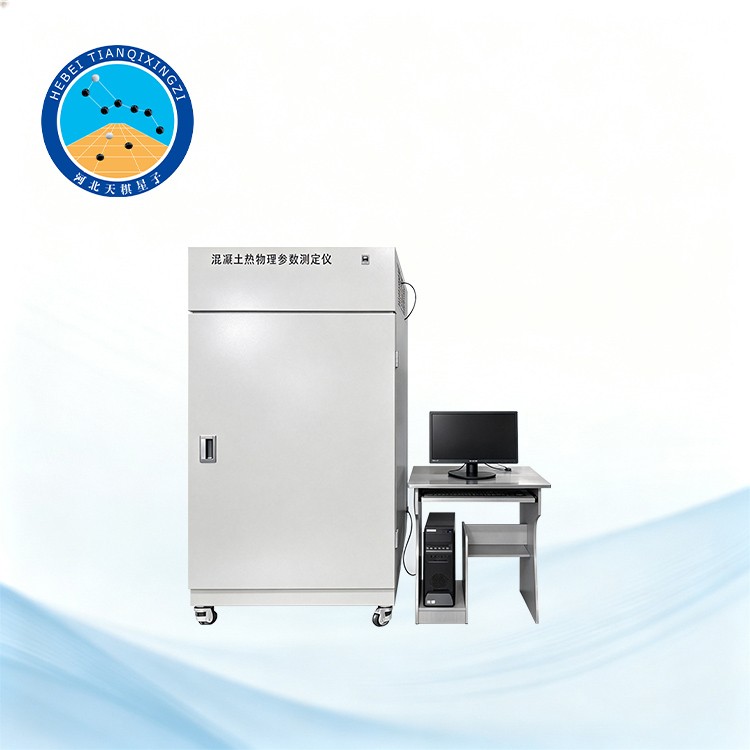
The Concrete Adiabatic Temperature Rise Tester is designed to measure the temperature change and maximum adiabatic temperature rise of concrete during the hydration process of cementitious materials under adiabatic conditions. Developed with reference to JG/T 329-2011 and EN 12390-15:2019, the tester provides accurate temperature monitoring and reliable data for concrete thermal performance evaluation, mix design, quality control, and research. It is suitable for concrete laboratories, construction material testing centers, universities, research institutes, and engineering projects.
Concrete Adiabatic Temperature Rise Tester
Model: TDJG329-4
1. Product Introduction
This instrument is developed and manufactured by Hebei Tianqixingzi Inspection Equipment Co.,Ltd. in accordance with the Chinese industry standard JG/T 329-2011, Concrete Thermal Physical Parameters Testing Apparatus. It is designed to determine the temperature variation and maximum temperature rise of concrete under adiabatic conditions during the hydration process of cementitious materials, including cement and supplementary cementitious materials.
In conventional methods for determining the adiabatic temperature rise of concrete, the ambient temperature is controlled to follow the temperature of the test specimen. In addition to meeting the national standard requirement of a tracking accuracy of ≤ ±0.05°C, it is also necessary to calibrate the deviation corresponding to the specimen temperature to ensure the accuracy and reliability of the measured adiabatic temperature rise.
However, even with these measures, the randomness of system errors means that they cannot always correspond precisely to the calibrated deviation values. At the same time, the tracking accuracy itself is also subject to random variations. As a result, the concrete specimen may release or absorb a certain amount of heat from the surrounding environment, causing the measured temperature curve of the concrete specimen to deviate to some extent from its actual adiabatic temperature rise.
To address this issue, our company has developed an integrated hardware and software control system based on the above two measures. Under the same tracking accuracy and deviation calibration conditions, the system can reduce the amount of heat released to or absorbed from the environment by the test specimen by approximately 50%, thereby improving the accuracy and reliability of the measured adiabatic temperature rise curve.
II. Technical Specifications
1. External dimensions: 1050 × 1875 × 1750 mm
2. Workspace dimensions: 800 × 800 × 1100 mm
3. Workspace temperature: 5–85°C
4. Tracking accuracy: ≤±0.05°C (tested with 50 liters of water over 72 hours; temperature fluctuation ≤±0.05°C).
Note: Control instrument: A new-generation instrument featuring high resolution, high precision, and high performance. It offers fully configurable inputs, ten sets of expert PID parameters, an advanced zone-based PID algorithm, and high-resolution display (supporting decimal points for temperatures up to 1000°C). It supports platinum resistance inputs (0.000–30.000 range) and a control resolution of 1/14,000 (this product utilizes a Pt100 platinum resistance sensor, a temperature range of 0–100°C, and two decimal places).
5. Refrigeration System
The refrigeration system uses a French Tecumseh compressor and adopts a dual-water-tank cascade configuration, combined with dual water pumps and variable-frequency speed control. This design enables the system to provide a high cooling capacity rapidly during the cooling stage and a stable cooling capacity during the heating stage. During the high-temperature stage, the water pump flow rate can be reduced to lower the heating power. The heating system adopts a thermal balance control method, helping to reduce energy consumption while maintaining stable temperature control.
6. Deviation value: Automatically determined by the computer based on the measured ambient temperature and specimen temperature.
7. Heating power: 2 kW
8. Cooling power: 1.1 kW
III. Applicable / Reference Standards
1. GB/T 50080-2016 — Standard for Test Method of Performance of Ordinary Concrete Mixtures
2. DL/T 5150-2001 — Test Code for Hydraulic Concrete
3. SL 352-2006 — Test Code for Hydraulic Concrete
4. EN 12390-15:2019 — Testing Hardened Concrete — Part 15: Adiabatic Method for Determination of Heat Released by Concrete During Its Hardening Process
IV. Product Configuration
1. Computer: Lenovo business computer
2. Refrigeration System: French Tecumseh
3. Refrigeration Components: Danfoss
4. Temperature Controller / Instrumentation: Yudian (Xiamen Yudian Automation Technology Co., Ltd.)
5. Computer Software: Developed in-house by our company
6. Magnetic Drive Pump: IWAKI, Japan
7. Thermal Insulation Tank: HBTQ
