


 Spanish
 Russian
 Arabic


Products Description
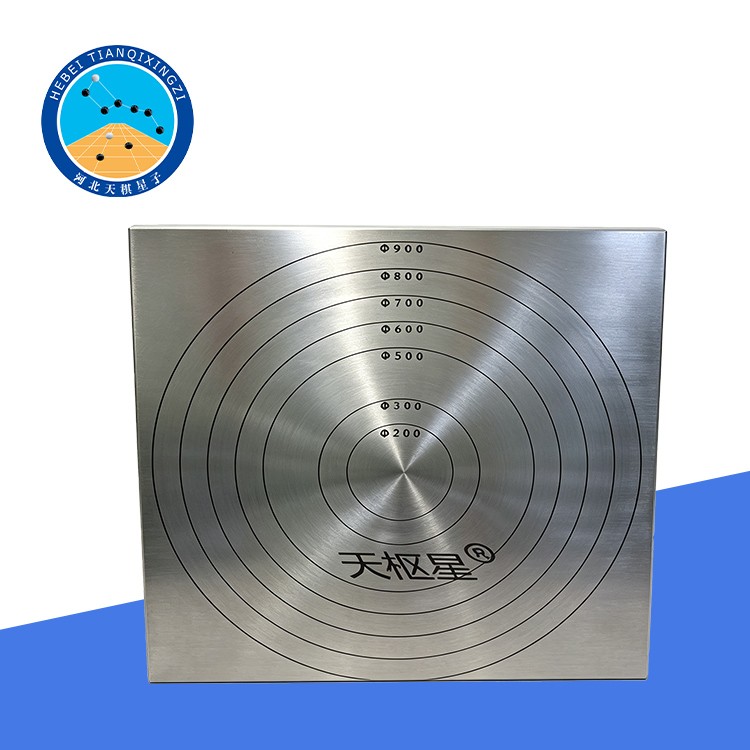
The Concrete Slump Flow Base Plate is mainly used in laboratories or on construction sites to evaluate the flowability and workability of concrete by measuring its slump flow. This test is essential for ensuring concrete quality and effective construction performance.
Concrete Slump Flow Base Plate
Model:TD532-1
I. Product Overview
The Concrete Slump Flow Base Plate is designed and manufactured in accordance with JGJ/T 283-2012, Technical Specification for Application of Self-Compacting Concrete. This test method is used to determine the filling ability of fresh self-compacting concrete by measuring its slump flow.
Applicable Standard: JGJ/T 283-2012
Reference Standards: EN 12350-8:2019, ISO 1920-13:2018, ASTM C1611/C1611M
II. Technical Parameters
Base Plate Side Length: Typically 1000 mm or 1500 mm
Deflection: ≤ 3 mm
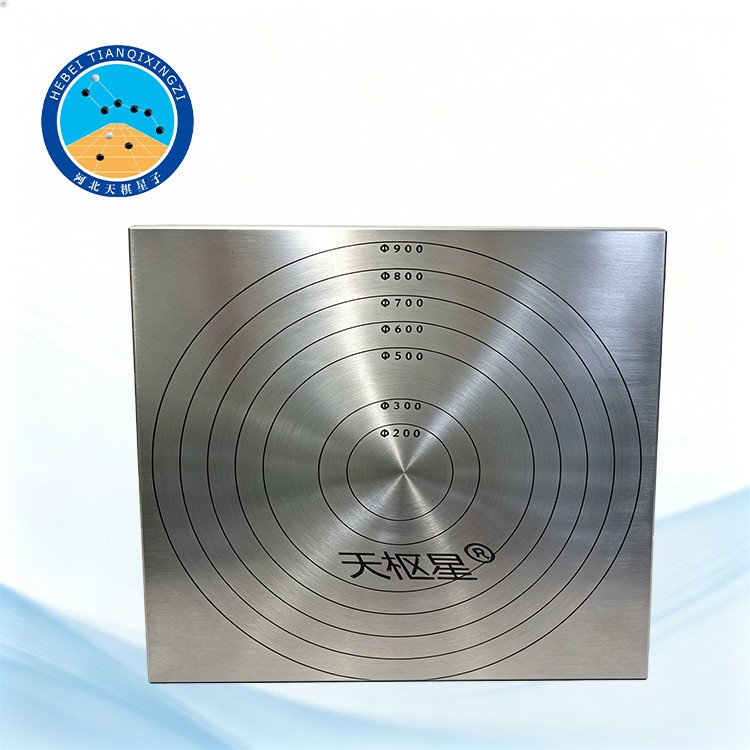
Concentric Circles: Marked with concentric circles having diameters of 300 mm, 600 mm, 800 mm, and 900 mm
III. Operating Instructions
1. Moisten the base plate and the slump cone, ensuring that there is no standing water on the inner wall of the slump cone or on the surface of the base plate. Place the base plate on a firm and level surface, and position the slump cone at the center of the base plate. Step on the foot pedals on both sides to hold the slump cone securely in place during filling.
2. Fill the slump cone with the fresh concrete sample without causing segregation. Use the sample container to allow the concrete mixture to flow evenly into the slump cone, filling it completely in a single operation without layering. The entire filling process, from the start of feeding to completion, should be completed within 1.5 minutes, without any tamping or vibration.
3. Use a scraper to remove the excess concrete from the top of the concrete-filled slump cone and level the surface flush with the upper edge of the slump cone. Then lift the slump cone vertically and steadily to a height of 750 mm. The lifting time should be controlled at approximately 3 seconds. After the concrete stops flowing, measure the maximum diameter of the spread and the diameter perpendicular to the maximum diameter. Each diameter only needs to be measured once. The entire process, from lifting the slump cone to completing the measurement of the spread diameter of the concrete mixture, should be completed within 40 seconds.
4. To determine the time T50 required for the slump flow to reach 500 mm, start the stopwatch when the slump cone is lifted and stop it when the outer edge of the spread concrete first touches the circumference of the 500 mm diameter circle marked on the base plate. Record the time to the nearest 0.1 s.
IV. Result Calculation
The slump flow of the concrete is calculated as the average of two perpendicular diameters of the spread concrete after the slump flow has stopped. The result shall be recorded to the nearest 5 mm.
Observe the condition of the concrete after the final slump flow. If coarse aggregate is found to accumulate in the center, or if a significant amount of cement paste is observed to exude around the edge of the final spread, this indicates that the concrete mixture has poor resistance to segregation. This condition should be recorded.
V. Product Features
•Rigid and Stable Base Plate: Made of a hard, smooth, non-absorptive material to provide a stable and level testing surface.
•Standardized Test Surface: The base plate is marked with concentric circles to facilitate accurate measurement of concrete slump flow and T50 time.
•Easy Operation: The smooth surface allows the concrete mixture to spread evenly and makes cleaning after testing convenient.
•Accurate Measurement: The clearly marked measurement circles help operators quickly determine the spread diameter and observe the flow behavior of fresh concrete.
•Suitable for SCC Testing: Specially designed for slump flow testing of fresh self-compacting concrete.
VI. Applications
The Concrete Slump Flow Base Plate is suitable for fresh self-compacting concrete testing in:
Concrete laboratories;
Construction material testing laboratories;
Quality control laboratories;
Ready-mix concrete plants;
Universities and research institutions;
Construction sites;
Concrete production and inspection facilities.
