


 Spanish
 Russian
 Arabic


Products Description
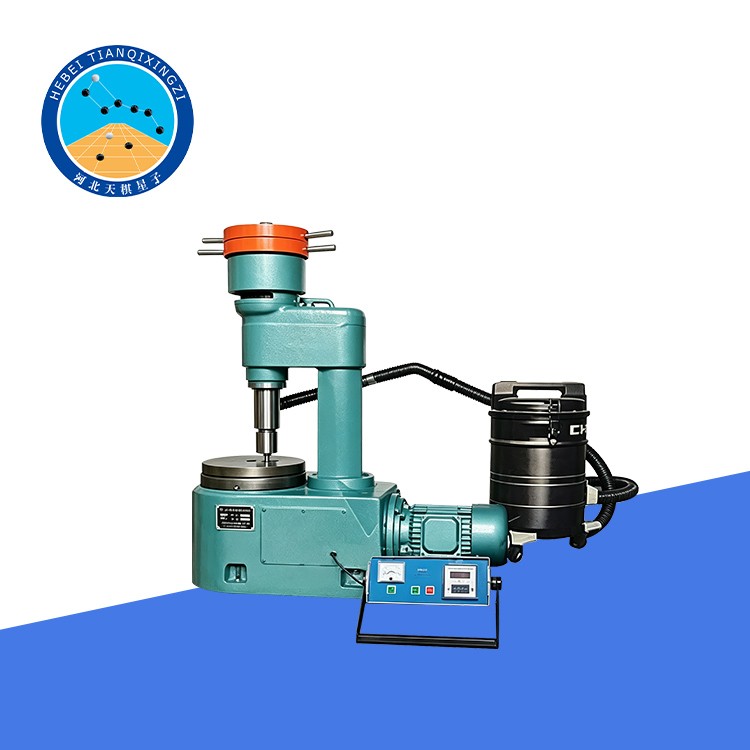
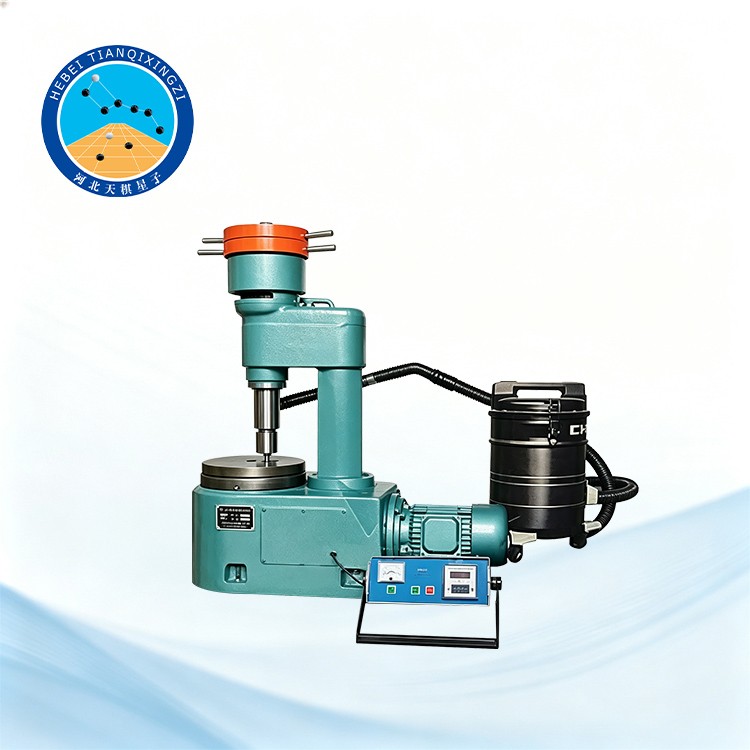
The Cement Mortar Abrasion Resistance Tester is designed to determine the abrasion resistance of cement mortar specimens. Using a controlled rotating-cutter abrasion method, it provides reliable and repeatable test results for cement, concrete, and construction material laboratories.
Cement Mortar Abrasion Resistance Tester
Model: TD510-1
I. Product Introduction
The Cement Mortar Abrasion Resistance Tester is developed and manufactured by our company in accordance with JTG E30-2005, Test Methods of Cement and Cement Concrete for Highway Engineering, including T0510-2005, Test Method for Abrasion Resistance of Cement Mortar.
The equipment is suitable for abrasion resistance testing of Portland cement, ordinary Portland cement, slag Portland cement, fly ash Portland cement, road Portland cement, composite Portland cement, and other types of cement or building materials specified for testing using this method.
Reference Standards:
GB/T 17671-1999 — Method of Testing Cements—Determination of Strength (ISO Method);
JC/T 681-1997 — Planetary Cement Mortar Mixer;
ASTM C944/C944M — Standard Test Method for Abrasion Resistance of Concrete or Mortar Surfaces by the Rotating-Cutter Method.
II. Specimen Preparation
2.1 The cement sample shall be thoroughly mixed and passed through a 0.9 mm square-hole sieve. It shall be delivered to the laboratory for storage one day before testing.
2.2 The sand used for testing shall be standard sand conforming to the Method of Testing Cements—Determination of Strength (ISO Method), with a particle size range of 0.5 mm to 1.0 mm.
2.3 The water used for testing shall be clean potable water.
III. Test Procedure
3.1 Take the dried specimen, place it on the horizontal rotating disc of the abrasion tester with the troweled surface facing downward, mark its position for alignment, and gently secure it with the fixture. First, pre-abrasion is performed for 30 revolutions under a load of 300 N. Remove the specimen, brush off all abrasive particles and dust, and weigh it. This mass is recorded as the initial mass of the specimen, m₁.
Then place the specimen back in its original position on the horizontal rotating disc, ensuring that it is level and securely fixed. Make sure that no particles remain between the specimen and the rotating disc, as they may affect the contact between the specimen and the grinding head. Perform a further 40 revolutions, then remove the specimen, brush off all abrasive particles and dust, and weigh it. This mass is recorded as m₂.
Throughout the abrasion process, position the vacuum cleaner nozzle over the abrasion surface so that the generated dust is promptly removed from the worn surface.
Note: The purpose of pre-abrasion is to improve the contact between the specimen and the grinding head and to remove the surface cement paste. Therefore, the number of pre-abrasion revolutions may be adjusted according to the strength and surface flatness of the specimen.
3.2 The flower-wheel grinding head and the horizontal rotating disc rotate in opposite directions. The grinding head abrades the specimen surface along a circular path, producing an annular abrasion area with an inner diameter of approximately 30 mm and an outer diameter of approximately 130 mm.
3.3 When the mass loss of the flower-wheel grinding discs reaches 0.5 g, interchange the inner and outer positions of the grinding discs within the same set. When a further mass loss of 0.5 g occurs, the grinding discs shall be discarded and replaced.
IV. Working Principle
The Cement Mortar Abrasion Resistance Tester evaluates the abrasion resistance of cement mortar by measuring the mass loss of a specimen after controlled surface abrasion. During testing, the flower-wheel grinding head and horizontal rotating disc rotate in opposite directions, producing a uniform annular abrasion area on the specimen surface. The mass difference before and after abrasion is used to evaluate the abrasion resistance of the mortar specimen.
V. Main Features
1. Designed for cement mortar abrasion resistance testing.
2. Controlled rotating-cutter abrasion method for consistent testing conditions.
3. Opposite-direction rotation of the grinding head and horizontal disc provides stable abrasion.
4. Annular abrasion area with controlled inner and outer diameters.
5. Suitable for testing different types of cement and specified building materials.
6. Vacuum-assisted dust removal helps keep the abrasion surface clean during testing.
7. Suitable for cement plants, construction material laboratories, research institutions, and quality control laboratories.
