


 Spanish
 Russian
 Arabic


Products Description
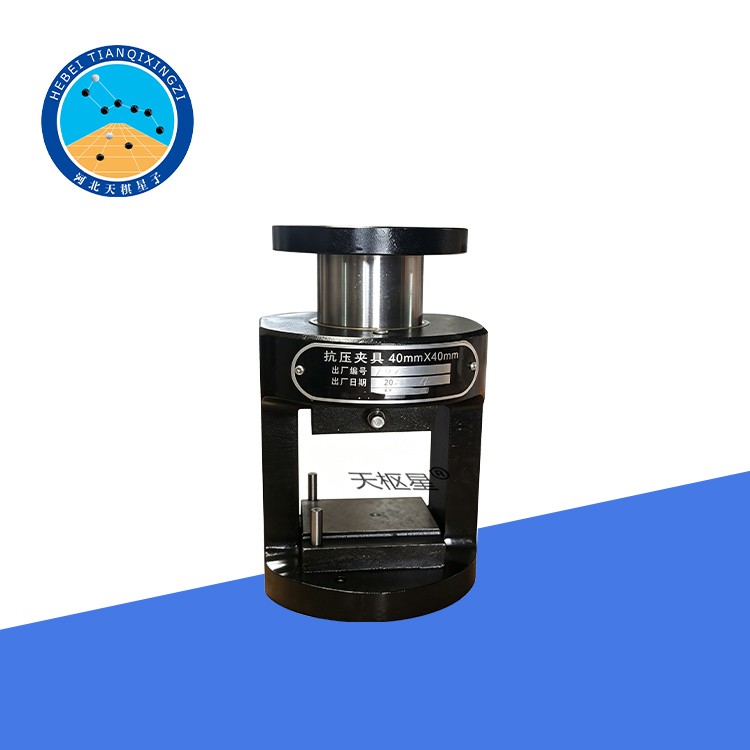
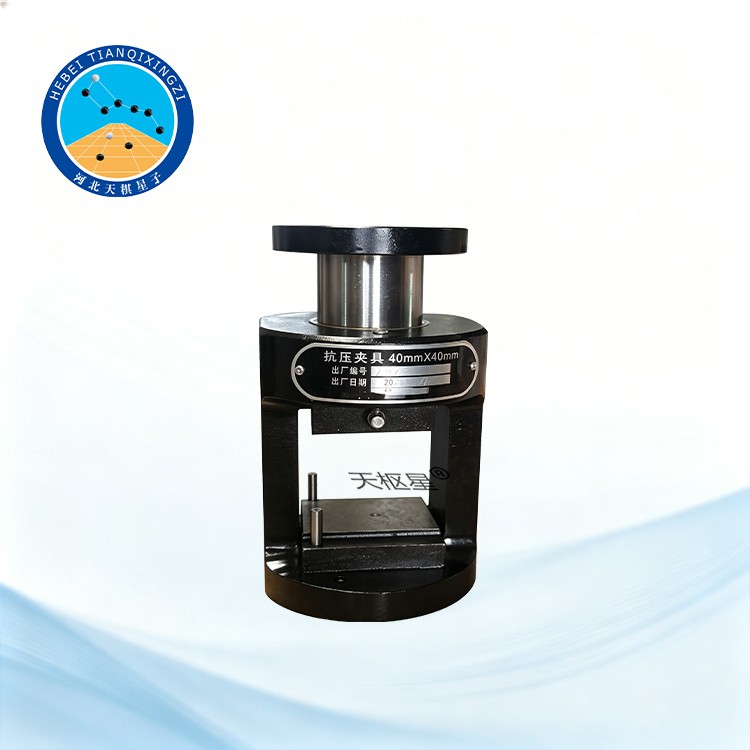
The Cement Mortar Compression Test Fixture is designed for determining the compressive strength of cement mortar specimens. The 40 × 40 mm fixture provides stable specimen positioning and reliable load transfer, making it suitable for use with compression testing machines in cement and construction material laboratories.
Cement Mortar Compression Test Fixture
Model: TDJC683
I. Product Application
The 40 × 40 mm Cement Mortar Compression Test Fixture complies with the requirements of JC/T 638-1997 and is equivalent to ISO 679:1989(E), Section 4.2.8. It is designed for use in compressive strength testing of cement mortar specimens and is suitable for use with compression testing machines in cement and construction material laboratories.
II. Technical Specifications
1. Length of upper and lower pressure plates: 40 ± 0.1 mm.
2. Fixture dimensions: φ100 × 165 mm.
3. Total weight of fixture: approx. 5 kg.
III. Operation and Maintenance
The 40 × 40 mm Cement Mortar Compression Test Fixture is suitable for use with various types of compression testing machines.
Operation Procedure
1. Position the Fixture
Place the fixture on the lower platen of the compression testing machine. Use the Φ8 mm locating hole at the bottom of the fixture to position and center it correctly.
2. Clean the Loading Surfaces
Before testing, thoroughly clean the contact surfaces of the upper and lower loading plates to remove any dust, debris, or other contaminants.
3. Place the Specimen
Place the cement mortar specimen inside the fixture, with the wider side of the specimen positioned against the locating pin (3) to ensure proper alignment.
4. Adjust the Upper Platen
Lower the upper platen of the compression testing machine until it makes contact with the upper spherical seat (10) of the fixture. Ensure that the loading surfaces are properly aligned before applying the load.
5. Apply the Load and Record the Result
Apply the compressive load according to the applicable test procedure. When the specimen fails, record the indicated load on the compression testing machine in N.
6. Calculate Compressive Strength
The compressive strength can be calculated by dividing the measured failure load by the cross-sectional area of the specimen:
Specimen cross-sectional area:
40 × 40 mm = 1,600 mm²
Compressive Strength (MPa) = Failure Load (N) / 1,600 (mm²)
The calculated result is expressed in MPa.
Maintenance:
After each test, promptly remove any cement mortar debris from the fixture and clean the loading surfaces. Keep the fixture dry and clean during storage. Regularly inspect the locating pin, spherical seat, and other moving or contacting components to ensure proper alignment and reliable operation.
IV. Notes for the 40 × 40 mm Model
1. Once the 40 × 40 mm model has been verified and certified by the relevant building materials testing authority, it can be used as a standard compression test fixture for comparative verification.
2. Standard test specimens are available as accessories for the standard compression test fixture and can be ordered separately upon request.
