


 Spanish
 Russian
 Arabic


Products Description
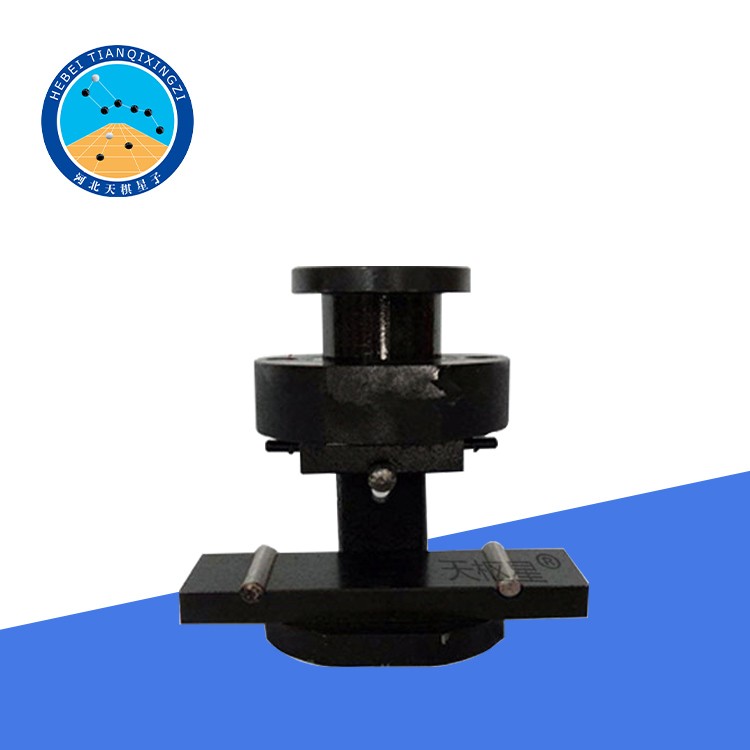
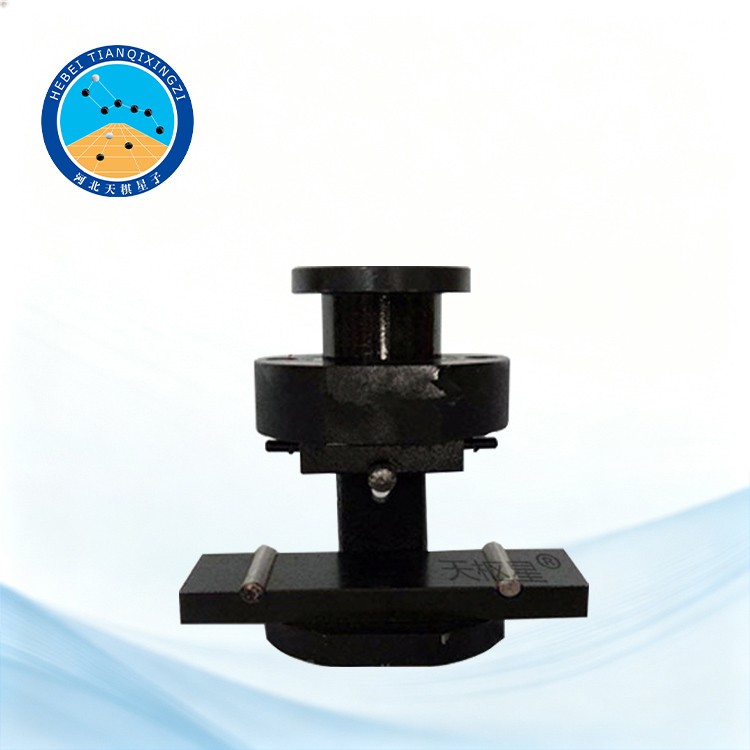
The Cement Mortar Flexural Strength Test Fixture is designed for flexural strength testing of 40 × 40 × 160 mm cement mortar specimens. Suitable for use with compression testing machines, it provides stable and accurate specimen positioning for reliable cement mortar strength testing in cement and construction material laboratories.
Cement Mortar Flexural Strength Test Fixture
Model: TDJC724-J
I. Product Introduction
The 40 × 40 × 160 mm Cement Mortar Flexural Strength Test Fixture is designed for determining the flexural strength of cement mortar specimens. It complies with the requirements of JC/T 683-1997 and GB/T 17671-1999 and is suitable for use with various types of compression testing machines in cement and construction material laboratories.
The fixture provides a convenient and reliable solution for cement mortar specimen testing and is suitable for routine cement strength testing and laboratory quality control.
Reference Standards: ISO 679:2009, EN 196-1:2016, ASTM C348-21
II. Operation Method
During operation, place the fixture on the lower platen of the compression testing machine and position it using the Φ8 mm locating hole at the bottom of the fixture. Clean the surfaces of the upper and lower platens before testing.
Place the cement mortar specimen into the fixture, with its wider side positioned against the locating pin. Adjust the upper platen of the compression testing machine until it contacts the upper spherical seat of the fixture. The load can then be applied.
When the specimen is crushed, record the indicated load on the compression testing machine in N. The compressive strength can be calculated by dividing the measured load by the cross-sectional area of the specimen:
40 × 40 mm = 1600 mm²
The resulting compressive strength is expressed in MPa.
III. Technical Parameters
Specimen Size: 40 × 40 × 160 mm
Upper and Lower Loading Plate Length: 40 ± 0.1 mm
Loading Roller Diameter: 10 mm
Distance Between Lower Support Rollers: 100 mm
Net Weight: Approx. 6 kg
IV. Performance Features
1. Robust Fixture Body:
The fixture is constructed with a robust body. The lower loading plate is securely mounted in the hole at the bottom of the fixture body and is used to support the cement mortar specimen during testing.
2. Specimen Positioning Pins:
Two locating pins are installed on the lower loading plate to ensure accurate and stable positioning of the cement mortar specimen.
3. Self-Adjusting Upper Loading Plate:
A bushing is securely fitted into the upper hole of the fixture body. An upper spherical seat is installed inside the bushing and can move freely in the axial direction and rotate within the hole. The upper loading plate is connected by a spring hanger pin, tension spring, nut, and spherical-head cylindrical screw, and is suspended from the fixture body in contact with the spherical surface of the upper spherical seat. This design allows the upper loading plate to automatically adjust its angle when the upper and lower surfaces of the specimen are not perfectly parallel, ensuring close and uniform contact between the upper loading plate and the specimen. A guide pin is installed on one side of the upper loading plate and inserted into the longitudinal slot in the middle of the fixture body, preventing horizontal rotation of the upper loading plate.
4. Automatic Reset:
During loading, the upper spherical seat moves downward under the applied force, bringing the upper loading plate into close contact with the upper surface of the specimen. After the load is released, the upper loading plate automatically returns to its original position under the action of the tension spring.
V. Precautions
After use, promptly remove any specimen debris from the fixture. Apply lubricating oil to all moving parts and rust-preventive oil to all exposed polished surfaces to prevent corrosion and ensure proper operation and service life.
VI. Structure and Components
The Cement Mortar Flexural Strength Test Fixture mainly consists of a lower fixture base, upper fixture base, standard loading rollers, and upper and lower pressure bars for the splitting test fixture. The lower fixture base is secured to the compression testing machine piston using locating pins and washers. The upper fixture base is secured to the testing machine crosshead by means of the upper support, diamond-shaped pin, locating pins on the testing machine, and two hexagon socket head screws.
