


 Spanish
 Russian
 Arabic

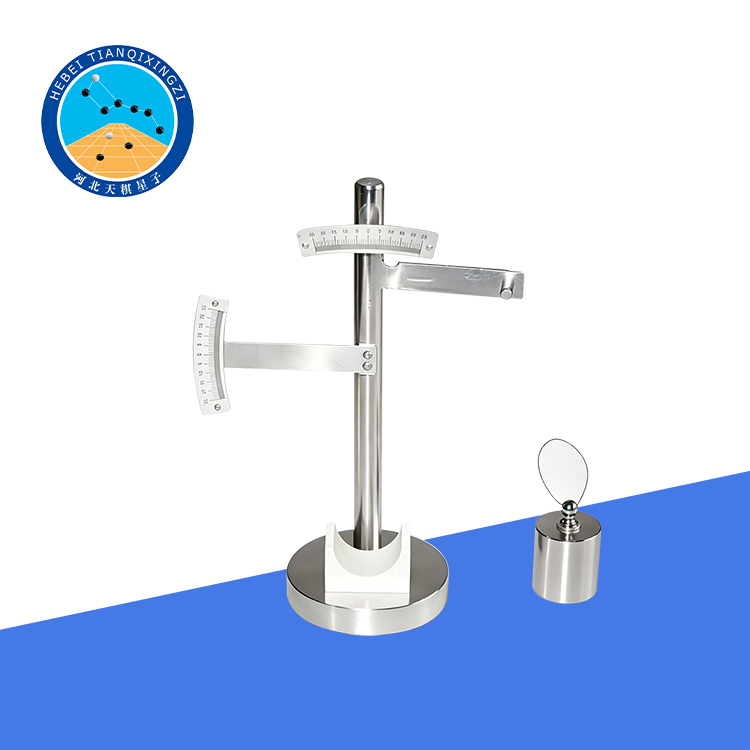

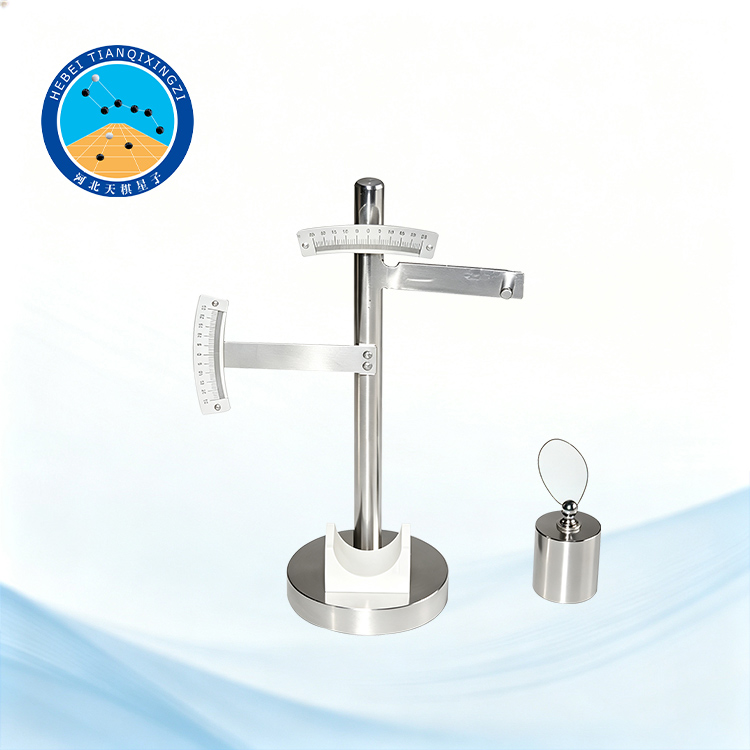
Products Description
The Le Chatelier Cement Soundness Tester is designed to determine the volume stability of cement by measuring expansion caused by free calcium oxide. It is suitable for laboratory testing of Portland cement, ordinary cement, slag cement, pozzolanic cement, and fly ash cement, and is widely used in cement plants, construction laboratories, research institutions, and quality control facilities.
Le Chatelier Cement Soundness Tester
Model: TD505-LS1
I. Product Introduction
The Le Chatelier Cement Soundness Tester is suitable for testing the volume stability of Portland cement, ordinary cement, slag cement, pozzolanic cement, fly ash cement, and other types of cement specified to comply with GB 1346-89, Methods for Determining Water Requirement for Standard Consistency, Setting Time, and Soundness of Cement.The instrument is mainly used to determine the soundness of cement caused by free calcium oxide (free CaO).
Applicable Standards: JC/T 955-2005; GB/T 1346; TAPPI T 227; ISO 5267-2
II. Main Technical Parameters
1. Weight of Special Weights: 300g
2. Minimum graduation of the maximum/minimum value scale: 0.5mm
3. Net weight: ≈1.65kg
III. Operation and Maintenance
1. Elasticity Inspection of the Le Chatelier Mould
Before each use, the elasticity of the Le Chatelier mould must be inspected. The procedure is as follows:
Hang the root of one indicator arm of the Le Chatelier mould on the hook of the tester, and hang a 300 g weight from the root of the other indicator arm. The distance between the two indicator tips should be 17.5 ± 2.5 mm (2X). After removing the weight, the indicator arms should return to their original position.
The Le Chatelier mould may be used only after it has passed the elasticity inspection.
2. Preparation of Le Chatelier Mould Test Specimens
Place the prepared Le Chatelier mould on a lightly oiled glass plate. Fill the mould with the cement paste and insert a 10 mm wide knife approximately 15 times to compact the paste, then smooth the surface.
Cover the mould with another lightly oiled glass plate and place the specified weight on top. Immediately transfer the Le Chatelier mould, test specimen, and glass plates to a moist curing chamber for curing at a controlled temperature of 20 ± 1°C and a relative humidity of not less than 90% for 24 ± 2 hours.
3. Boiling of the Le Chatelier Mould Test Specimens
First, measure the distance between the tips of the two indicator arms of the cured Le Chatelier mould containing the test specimen, accurate to 0.5 mm, and record the measurement under the corresponding specimen number.
Then place the Le Chatelier moulds together with the test specimens on the grille/rack inside the boiling water bath, with the indicator arms facing upward. Arrange the test specimens so that adjacent moulds are alternately crossed without interfering with each other.
Heat the water to boiling within 30 ± 5 minutes, then maintain the boiling temperature for 3 h ± 5 min.
Finally, determine whether the test specimen meets the requirements by calculating the difference between the distance between the two indicator tips after boiling and the distance measured before boiling. This difference represents the expansion value of the cement specimen.
4. Storage of the Le Chatelier Moulds After Use
After use, remove the test specimen and any residual material from the Le Chatelier moulds, then place the moulds properly for storage.
Do not stack the moulds or allow them to be compressed or deformed by other objects.
