


 Spanish
 Russian
 Arabic


Products Description
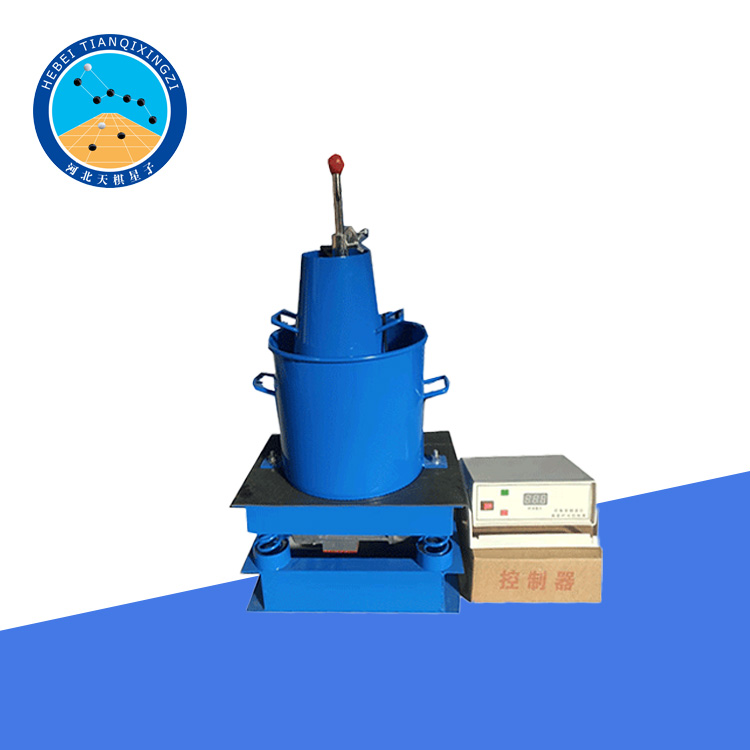
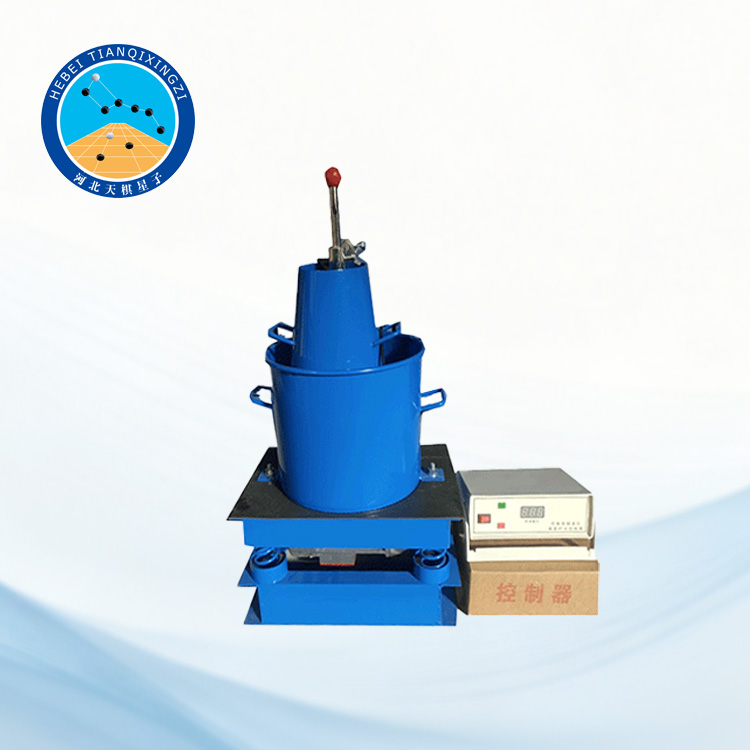
Digital Concrete Vebe Consistometer is a precision laboratory instrument designed to determine the Vebe consistency and workability of fresh concrete mixtures. It measures the vibration compaction time required for concrete to reach a fully compacted state, providing accurate and reliable test results. The instrument is widely used in concrete laboratories, construction material testing centers, and engineering research institutes for quality control and material evaluation.
Digital Concrete Vebe Consistometer
Model:TD-WB3
I. Product Introduction
This instrument is designed and manufactured in accordance with the Chinese national standard GB/T 50080-2016, with reference to EN 12350-3, BS 1881:104, and UNI 9419. It is mainly used to determine the Vebe consistency of fresh concrete mixtures. The consistency value of concrete is determined by measuring the vibration compaction time (in seconds) required for the concrete mixture to become fully compacted. The instrument is suitable for testing concrete mixtures with a maximum aggregate size of no more than 40 mm and a Vebe time ranging from 5 to 30 seconds.
II. Main Technical Parameters
Slump Cone: Top inner diameter: 100±2mm
Bottom inner diameter: 200±2mm
Cylinder height: 300±2mm
Capacity Cylinder: Inner diameter: 240±3mm
Inner height: 200±2mm
Disc: Transparent and flat
Diameter: 230mm±2mm
Thickness: 10mm±2mm
Total mass of sliding part: 2750g±50g
Vibration frequency: 50Hz±3.3Hz
Vibration table amplitude (with empty container): 0.5±0.10mm
Table dimensions: Length 380mm, Width 260mm
Timing range: 0.1-99.9 seconds
External dimensions: 380×520×870mm
Motor voltage: 380V
Motor power: 370W
III. Test Procedure
1. Place the instrument on a firm and level platform. Use a wet cloth to moisten the inner walls of the container, slump cone, feeding hopper, and other accessories.
2. Lift the feeding hopper above the slump cone and secure it. Adjust the position of the container so that its axis is aligned with the axis of the feeding hopper, then tighten the round nut.
3. Use a small shovel to fill the concrete sample obtained as required into the slump cone in three layers. After each layer is compacted, it should be about one-third of the height. Use a tamping rod to tamp the concrete evenly 25 times on the cross section of each layer. When tamping the second and top layers, the rod should penetrate the current layer and just enter the next top layer. After tamping, scrape the top surface smooth.
4. Turn the transparent disc above the slump cone, lock the positioning screw, and set the instrument to zero.
5. Move the feeding hopper and transparent disc away, then vertically lift the slump cone. During this process, ensure that the concrete sample is not subjected to any horizontal twisting movement.
6. Turn the transparent disc onto the top surface of the concrete cone, loosen the positioning screw, and lower the disc until it gently contacts the concrete surface. The displayed value is the slump value.
7. Press the "Start/Stop" button on the controller while simultaneously starting the stopwatch. When vibration causes the bottom surface of the transparent disc to fully contact the cement paste (a small amount of enclosed air bubbles is acceptable), immediately stop the stopwatch and turn off the vibrating table.
8. Record the time shown on the stopwatch, with an accuracy of 0.5 s.
IV. Maintenance and Inspection of Digital Vebe Consistometer
1. After each use, the container, feeding hopper, slump cone, and transparent disc must be thoroughly cleaned and wiped dry with a cloth. In particular, the cement paste on the transparent disc must be removed completely to ensure clear observation during the next test. (After cleaning the instrument, wipe it dry, and pay special attention to moisture protection of the electrical components.)
2. Before starting vibration each time, check whether all components and parts are properly positioned and whether all screws are securely tightened.
3. During long-term use, if the transparent disc becomes frosted or roughened, it should be polished in time. If the thickness is less than 8 mm, the disc should be replaced promptly. During operation, if the applied load is less than 2700 g, replace the transparent disc or add additional weights. The additional weight can be added by fixing a washer with a mass equivalent to 50 g under the top screw.
