


 Spanish
 Russian
 Arabic

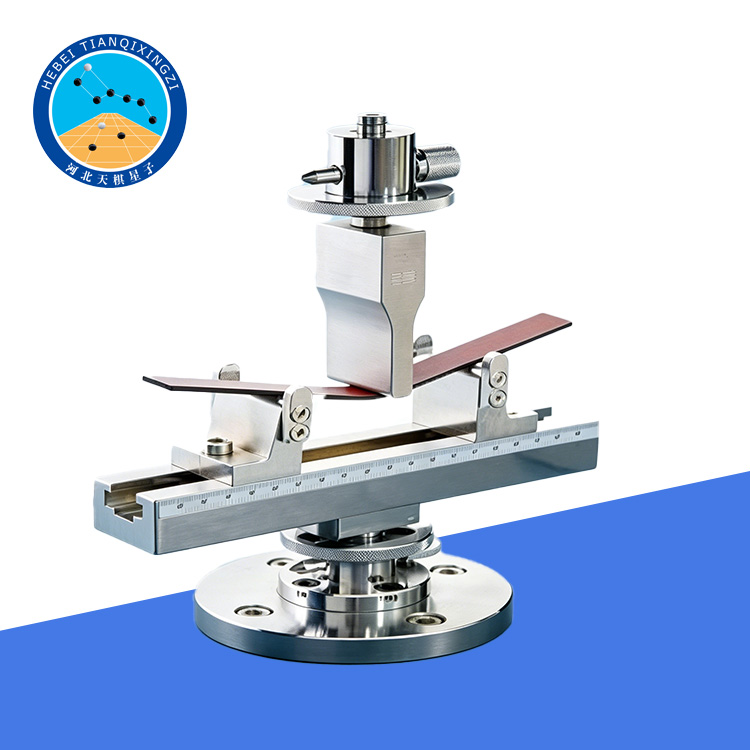

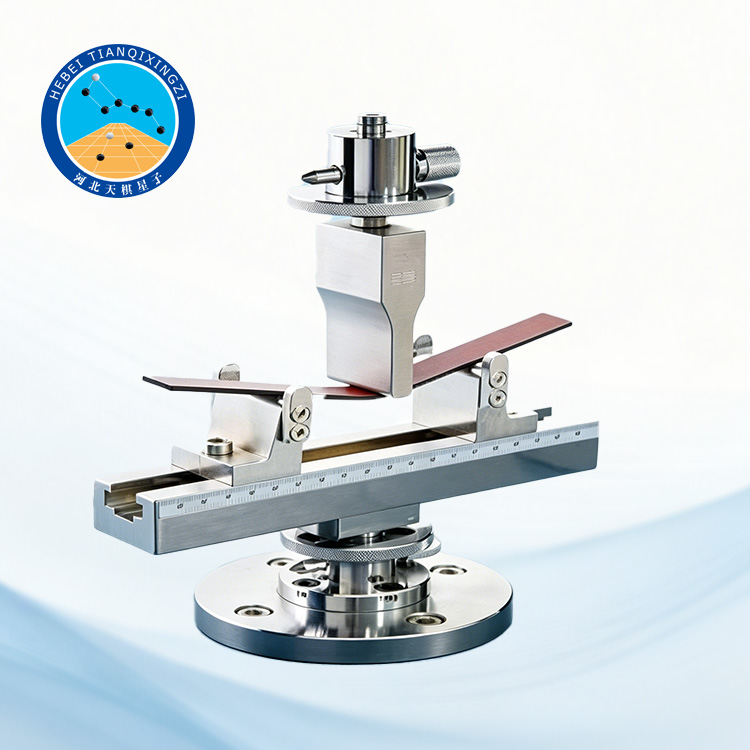
Products Description
This testing system is designed for determining the maximum load-bearing bending moment (MOR) and modulus of elasticity (MOE) of decorative wood-based panels under flexural stress. It provides accurate and reliable performance evaluation data for quality control and laboratory testing.
Three-Point Bending Tester for Wood Panels
Model: TD17657-WJ1
I. Product Introduction
The TDTD17657-WJ1 Series Three-Point Bending Test Apparatus for Decorative Wood-Based Panels is developed by Hebei Tianqixingzi Inspection Equipment Co., Ltd. in strict accordance with the technical requirements specified in the Chinese national standard GB/T 17657.The instrument is also developed with reference to international standards such as EN 310 and ISO 16978, ensuring compatibility with global testing requirements.
II. Technical Specifications
1. TDTD17657-WJ1 Model
Support roller diameter: Φ10 ± 0.5 mm × length 60 mm
Loading roller diameter: Φ10 ± 0.5 mm × length 60 mm
Maximum span: 180 mm (adjustable)
2. TDTD17657-WJ2 Model
Support roller diameter: Φ30 ± 0.5 mm × length 60 mm
Loading roller diameter: Φ15 ± 0.5 mm × length 60 mm
Maximum span: 700 mm (adjustable)
III. Test Specimen Requirements
Specimen size:
Length = (20 × thickness + 50) mm
Width = 50 ± 1 mm
For hollow or honeycomb structured panels, specimen width must be at least twice the width of each tube cell unit.
If large deflection occurs without failure, the span distance may be reduced (minimum 100 mm), and the actual span at failure must be recorded in the test report.
IV. Test Procedure Summary
1. Specimen Preparation
Specimens must be prepared according to test requirements. The wood-based panels should be free from defects that may affect strength, especially for plywood and engineered boards.
2. Conditioning
Condition specimens at:Temperature: 20 ± 2°C; Relative humidity: 65 ± 5%, until constant mass is achieved. Constant mass is defined as a difference of less than 0.11% between two weighings within 24 hours.
3. Test Method
Measure specimen width and thickness accurately
Adjust span: at least 20 × thickness, minimum 100 mm, maximum 1000 mm
Place specimen horizontally with grain direction perpendicular to supports
Apply load at a constant rate until failure
Loading time to maximum load: 60 ± 30 seconds
Record load-deflection curve and maximum load
V. Key Features
High-precision three-point bending testing system;
Dual model design for different specimen sizes;
Adjustable span structure for flexible testing requirements;
Real-time load and deflection measurement;
Compatible with MOR and MOE calculation;
Compliant with international testing standards.
VI. FAQ
1. What is a three-point bending testing machine used for?
A three-point bending testing machine is used to determine the flexural strength (MOR) and modulus of elasticity (MOE) of wood-based panels under load. It evaluates how materials behave when subjected to bending forces until failure.
2. What is the difference between MOR and MOE?
MOR (Modulus of Rupture): Indicates the maximum bending strength before failure.
MOE (Modulus of Elasticity): Indicates the stiffness or resistance to deformation under load.
3. How long does a test take?
The load is applied at a constant rate, and the specimen typically reaches maximum load within 60 ± 30 seconds, depending on material properties.
4. Can the machine test different panel sizes?
Yes. The machine features an adjustable support span (100 mm to 1000 mm), allowing testing of different panel thicknesses and structures.
